










































Kids Speak Out on Election in iReport Videos
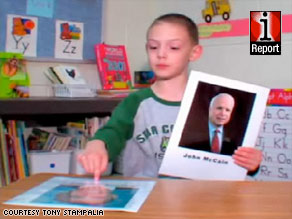
The iReport is an online video posting site that has given children and young people too young to vote in the United States (US) presidential election a chance to express their political opinions and ideas. It is a website for user-generated video content made available by the news service CNN. CNN does not edit content, but places some of the content on its official news site, including content generated by young people.
Both individuals and school classes have uploaded their videos to this site, some of whom are quoted in a news article commenting on what they feel their country needs, for example: "The students called for a 'person with integrity who knows right from wrong', 'a person of vision who not only knows what is but also what can be,' 'a person with a moral compass to help [set] a course for our nation,' and 'a person who has the ability to unite and inspire us as we face challenging times.'"
One form of student presentation was to portray the candidates: "All of the presidential and vice presidential 'candidates' gave speeches, with Secret Service, prospective first ladies and family members in tow." The experience was extended at one school to participating in mock-campaigning, voter registrations, and precincts and exit polling.
Participation included church youth groups, one of whom used the opportunity to create fictional humourous candidates who teach lessons about dating and parental conflicts. Adults, particularly parents, participated by interviewing children, sometimes using the candidates ' photos to clarify the choices. As reported here, candidate appearance was important to children in their decisions on favourites.
Some children used the video as an opportunity to make a plea to US voters. Another filmed his fund-raiser, a lemonade stand. Another young person, nearly old enough to vote, filmed himself registering voters. He also used the video log (vlog) opportunity to record aspects of the campaign, including the conventions and the debates, and rallied other young people to speak out through video on the importance of voting.
Another election tradition which predates the internet gives children an opportunity to express their choice of candidates. As described on the CNN website, "The Scholastic Election Poll has been doing that for at least 68 years. Poll takers said their poll has reflected the outcome of the actual election all but twice since 1940. A quarter of a million students participated in the poll."
CNN website accessed on February 27 2009. Photo courtesy of Tony Stampalia.
- Log in to post comments