











































The Impact of Radio on Nutrition-Related Knowledge Behaviors in Senegal
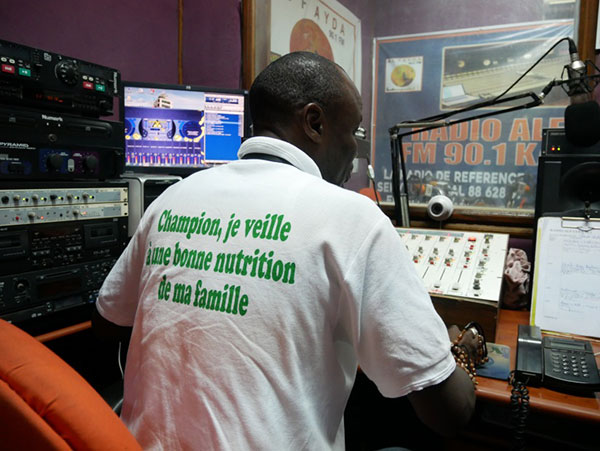
“By working with radio stations, we could increase our audience at a low cost and assist local radio stations to develop new skills in communication and monitoring and evaluation.”
This brief looks at the implementation and impact of radio programming used by Strengthening Partnerships, Results, and Innovations in Nutrition Globally (SPRING) as part of a larger social and behaviour change communication (SBCC) strategy, which also included community video and community mobilisation events, to improve nutrition in Senegal.
Starting in 2016, SPRING partnered with six local radio stations to produce and air 60-second spots on high-impact nutrition and hygiene practices such as nutrition-sensitive agriculture, hand washing, male involvement in household chores, and breastfeeding. In addition to radio spots, the stations aired interactive radio programmes, which used a talk show format. They promoted nutrition-related messages through live interviews with influential community members, health workers, and representatives from agricultural partner networks. Each month’s theme complemented the community videos that SPRING partners disseminated that month during women’s group meetings, community meetings, and household visits.
The brief explains how SPRING trained radio partners on nutrition-sensitive and nutrition-specific messages and worked with them to develop engaging radio content for these topics. Particularly successful was the participatory monitoring of the radio broadcasts to maintain the dissemination schedule and high-quality broadcasts: SPRING formed listening groups, selected from partner community organisations and networks, to listen to radio spots and programmes and take notes on the timing, topics, presenter’s skill and approach, and sound quality. This information was fed back to the radio stations and strengthened the relationship with radio stations and the station’s commitment towards the goals of the project.
The brief discusses how SPRING maximised the nutrition messages through the careful selection of radio partners, and ensured saturation and reach of messages through strategic scheduling. It also looks at how the radio programmes were linked to other events, such as social mobilisation campaigns, within the community. One factor contributing to the success of the initiative is attributed to the fact that the radio spots were produced in multiple local languages, not just the most frequently spoken language, as this increases understanding and reach.
Finally, the brief shares some of the impacts of the radio component. In July 2017, SPRING interviewed 95 randomly sampled men and women between 18 and 65 years old, all of whom lived in villages reached by the radio partners (65 women and 30 men). According to the brief, “...radio listeners reported learning about hygiene, the benefits of exclusive breastfeeding, the importance of complementary foods for children ages 6 to 24 months, and the link between gender and nutrition. Of the interviewees, 78 percent could state the critical moments for handwashing, the benefits of a tippy tap handwashing device, and the importance of keeping the bathroom clean.” However, as explained in the brief, respondents were least likely to recall messages relating to gender equity, reflecting that “it is possible that this topic is less familiar to the audience than handwashing or exclusive breastfeeding. It would be beneficial to put greater emphasis on gender-related messages, with detailed examples of how men can help women reduce their workload in the household.”
- Log in to post comments