










































I Am Malala: A Resource Guide for Educators and A Toolkit for After-School Clubs
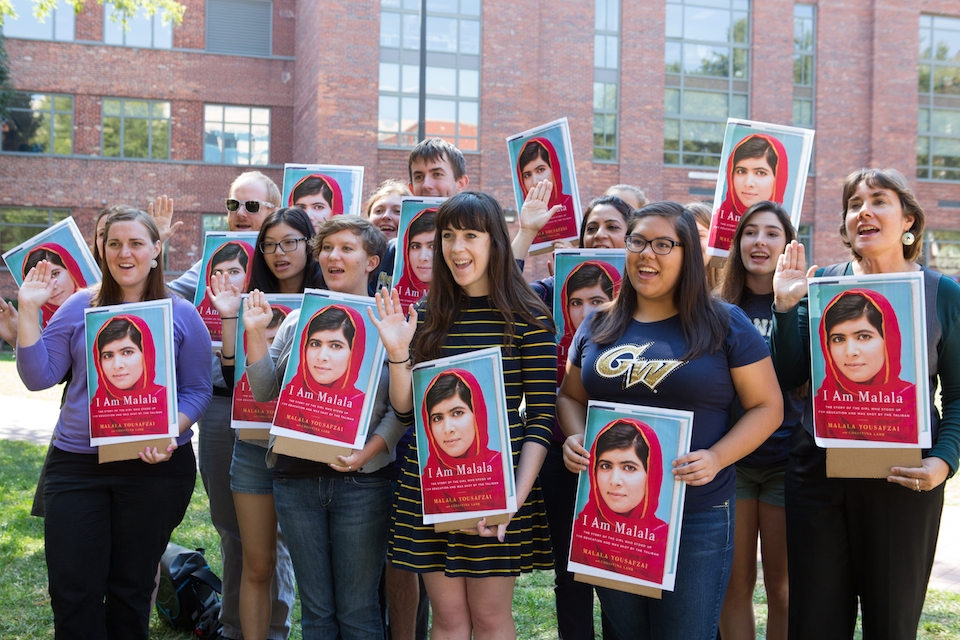
To expand the reach of Malala Yousafzai's memoir, I Am Malala: The Girl Who Stood Up for Education and Was Shot by the Taliban, and spread her message to young activists around the world, the Global Women's Institute (GWI) of the George Washington University, in collaboration with the Malala Fund, developed a resource guide and toolkit for after-school clubs for high school, college and university students in the United States and around the world. Building on the content of Malala's memoir, the resources are designed to support global efforts to mobilise women and men to address women's and girls' rights to an education.
GWI explains that the Taliban destroyed more than 400 schools near Malala's home in Swat Valley, Pakistan, 70% of which were girls' schools. A July 2016 UNESCO report [PDF] indicates that more than 130 million girls around the world are out of secondary school.
The resource guide, which challenges university students to think deeply, share their experiences, and engage with their communities, is organised around these themes:
- Memoir as literature and history
- Education: a human right for girls
- Cultural politics, gender and history in Malala Yousafzai's "I Am Malala"
- Religion and religious extremism
- Malala and violence against women and girls
- Malala leadership essay
- Malala and the media
- Global feminisms: speaking and acting about women and girls
Each theme begins with learning objectives and a narrative, intended to start the conversation and help plan lessons. The theme then includes individual exercises, group activities, and resources to assist students and instructors in deepening their knowledge of a topic.
Recognising the growth and enthusiasm of after-school clubs, the GWI also developed a toolkit meant for high school students. This toolkit follows the same themes as the resource guide, but includes more activity-based material for the purpose of peer-led, after-school club groups. It is also less necessary to have access to Malala's memoir in order to use the toolkit.
63 (Resource Guide); 28 (Toolkit)
GW website, GW news, May 26 2015, and GW news piece by Lauren Ingeno, November 14 2014, and Malala Fund blog by Hannah Orenstein, August 18 2016 - all accessed on January 19 2018.
- Log in to post comments