










































Healthy Environments
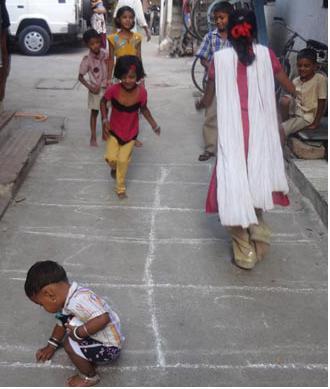
"The attainment of full inclusion … is realized when children are given the opportunity, places, and time to play with each other (children with disabilities and no disabilities)." UN Committee on the Rights of the Child
This publication on early childhood development (ECD) examines the linkages between the physical world children inhabit, the quality of their lives, and their well-being. From the preface: "Section 1 of this issue of Early Childhood in Focus draws attention to some key global challenges in providing healthy physical environments. We recognise that multisectoral policy responses are needed to ensure adequate housing and improved water and sanitation, as well as recreational spaces....Section 2 explores the opportunities and challenges of living in urban environments. The conditions in many urban slums violate children’s rights, as well as being among the most visible expressions of inequalities and social exclusion....Early childhood practitioners have always paid close attention to the design of environments specifically for young children. Section 3 reviews a range of such spaces, including innovative 'democratic spaces', and 'child-friendly spaces' in areas affected by disasters and emergencies." Early Childhood in Focus is a series of publications produced by the Child and Youth Studies Group at The Open University, United Kingdom, with the support of the Bernard van Leer Foundation.
Contents include the following titles with selected quotations on rights and challenges:
Preface
- Physical environments and children’s well-being
- Environments shape children’s development - ..."The home and nursery aren’t just settings in which children live, grow and learn – they are powerful in their own right, filled with personal meaning and significance.."
- The right to a healthy environment - ..."Articles of the UN Convention on the Rights of the Child make little direct reference to an enabling and supportive material environment, even though this is fundamental to realising many of the basic rights of children."
- Water and sanitation - ..."Improved hygiene practices are important but can be a challenge to realise without adequate water and sanitation services."
- A safe and secure place - ..."Children’s attachments to important places, especially home, are an essential part of their feelings of security."
- Disasters and emergencies - ..."The poorest families and the least-developed communities are most at risk from sudden and longer-term disasters."
- Anticipating the impact of climate change - ..."Weather events that may have little effect on households in better-served parts of a city can be devastating for those living in hazardous locations or without basic infrastructure."
- Policy Questions
- The challenges of living in cities
- Increased opportunities or increased inequalities? - ..."The adverse living conditions of poor urban families are very often compounded by barriers to accessing the good-quality maternal and child health services, kindergartens and schools that may be available to their more affluent neighbours."
- Making the home environment safe - ..."Research shows... that ‘home’ is not always a safe place for children... and young children are vulnerable to a range of indoor risks."
- Improving governance and planning - ..."Children can and should be involved in all levels of decision making about their homes, neighbourhoods and school facilities."
- The Child Friendly Cities Initiative - ..."Child Friendly Cities builds on a comprehensive vision of a well-planned, safe and unpolluted environment, with young people themselves playing a key role in the process."
- Planning urban spaces for children: a research project in Delhi, India - ..."The concept of ‘place friendship’ draws attention to children’s emotional investment in places, as foci for activities, for learning and for relationships....Research into children’s place friendship has identified practical strategies for city planners to make cities more friendly by design."
- Community action case study: providing toilets for children - ..."Networks of community groups can be a catalyst for effective practical improvements to urban living conditions."
- Policy Questions
- Making spaces for (and with) children
- The social production of children’s spaces - ..."Enlightened providers include all stakeholders, including young children, in designing and planning children’s spaces."
- Supporting children’s right to play - ..."Respecting the right to play requires that adults care for and value the many moments of children’s playfulness that emerge in the routines and practices of childhood spaces."
- Safe spaces following emergencies: a Ugandan case study - ..."Providing safe spaces for young children and families is among the first priorities of disaster relief....Safe spaces provide rich opportunities for integrating important health, food distribution, and nutrition services and for supporting stressed families."
- Inclusive spaces for early childhood - "Enabling disabled children and their non-disabled siblings and peers to use play spaces together contributes to social inclusion, community building and networking..."
- Design for the built and natural environment - ..."Design for early childhood settings must take account of both the indoor and the outdoor environment, including children’s relationship to the natural world."
- Democratic spaces for early childhood - ..."Spaces for early childhood can express democracy as a fundamental value: in management; in decision making and in everyday life; in approaches to learning and evaluation; in a willingness to question established wisdoms; and in a desire to experiment."
- Designing spaces with children- ..."Participatory design processes use visual methods to construct a narrative about the meanings children and adults attach to particular places."
- Policy Questions
35
Bernard van Leer Foundation website, October 2 2012, and email from Teresa Moreno to The Communication Initiative on December 20 2012.
- Log in to post comments