











































Half the Sky Movement - Mobile Games
The three games were launched in September 2012 for use on feature phones in India, Kenya and Tanzania, and are available in English, Hindi, and Kiswahili.
"Family Choices" aims to enhance the perception of a girl's place in and value to her family, with an emphasis on keeping her and her peers in school. The 'Choose your own adventure' game allows players to explore the outcomes of a family's choices related to girls' education, early marriage, and family planning. Players decide whether Anu (in India) or Mercy (in Kenya) will ultimately achieve her dream of someday becoming a financially independent nurse. A positive decision leads to a golden leaf and another step toward independence and empowerment, and allows the player to progress to the next episode. Negative choices put unadorned leaves in the player's family tree and lead to an invitation to repeat the episode to explore multiple pathways and their respective endings. As the game progresses, as in real life, the choices get harder. Episodes two and three also address early marriage, pregnancy, family planning, and pursuit of higher education.
"9-Minutes" simulates the experience of nine months of pregnancy in nine minutes. The game presents players with a series of physical, medical, and social choices in a race against the clock. Players race to collect icons that represent healthy pregnancy choices for a particular month of pregnancy and to avoid icons representing the unhealthy choices. The player's choices on topics such as having a birth plan, gaining family support, ensuring proper nutrition, getting antenatal care, and going to a health facility for delivery determine the health and well-being of both the mother and her baby and reinforce steps towards a healthy pregnancy.
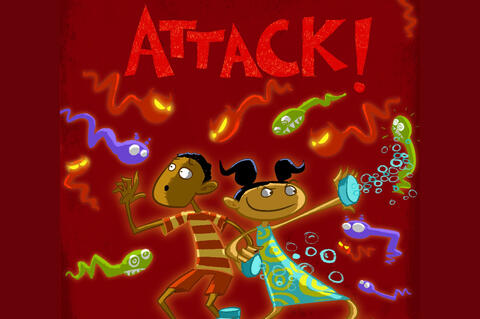
In "Worm Attack!" young players, their teachers, and their families work to rid themselves and their communities from infestation of intestinal worms, a problem that leads to diarrhoea, anaemia, internal bleeding, malnutrition, and other symptoms that lead to school absences. Worms affect 600 million school-age children worldwide, and studies show that those who are regularly dewormed are more likely to stay in school, have higher rates of literacy, and have greater earning potential.
The games build upon principles consistent with social learning theory, which asserts that people learn through observing others' behaviours and attitudes. All three games use two common models to achieve social impact - adventure and simulation. Players are exposed to characters that can serve as role models and will be rewarded for positive actions, such as killing the worms inside their stomachs or seeking antenatal care. Players also face choices, such as making decisions that lead to a delay in marriage and betterment of the family.
The games are disseminated by non-governmental organisations (NGOs) and more widely through mobile phone company app stores. According to the initiative, feature phones that support basic Java are most commonly used in the target countries, increasing access to the game through mass distribution channels. However, there are still accessibility issues based on cost to download, internet access, and the sharing of a single phone by multiple users. To help address accessibility barriers and to increase the impact of the games, the games are being released for free and packaged with related videos and a facilitator's manual for use by community groups with their audiences. It is generally recognised that games will have a greater impact when used as part of a larger health, gender, or education initiative. The Half the Sky Movement estimates that, with continued funding, 1 million users will be reached with these products.
The three games were developed in partnership with NGOs working on the issues addressed, including Deworm the World, Breakthrough, FilmAid, and CEDPA.
Click here to download Family Choices.
Click here to download Worm Attack!
Click here to download 9 Minutes.
Maternal health, child health, gender empowerment
Preliminary testing of Family Choices in Kenya found the games were positively received. One woman who played the game said her favourite part was when "Mercy [Kenya's version of Anu] stood her ground and she didn’t let anyone interfere with her dreams."
The Half the Sky Movement is a multi-platform initiative that seeks to ignite the change needed to put an end to the oppression of women and girls worldwide. Inspired by journalists Nicholas Kristof and Sheryl WuDunn's book, Half the Sky: Turning Oppression into Opportunity for Women Worldwide, the movement brings together video, websites, games, blogs, and other educational tools to not only raise awareness of women's issues, but to also provide concrete steps to fight these problems and empower women.
United States Agency for International Development (USAID), C-Change, Games for Change, Mudlark, E-Line Media, Deworm the World, Breakthrough, FilmAid, and CEDPA.
USAID website and USAID website and USAID website on January 3 2013.
- Log in to post comments