










































Global Polio Eradication Initiative Technical Brief: Gender
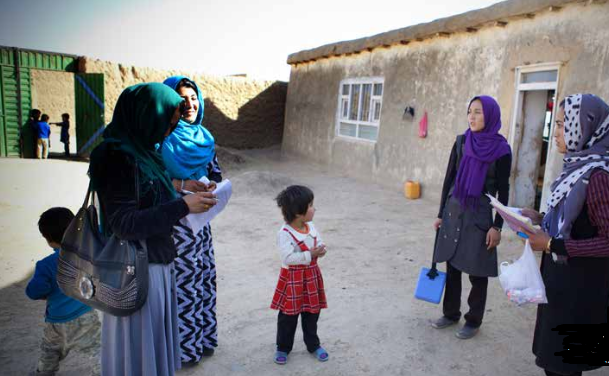
"Gender roles and norms, and their underpinning power relations, are powerful determinants of health outcomes. To reach every last child and achieve a polio-free world, the Global Polio Eradication Initiative (GPEI) is committed to identifying and addressing gender-related barriers to immunization, communication and disease surveillance."
This brief analyses the ways in which the gender of the child, caregiver, and frontline worker influences the likelihood that a child is immunised against polio, with a specific focus on gendered determinants of immunisation in the Global Polio Eradication Initiative (GPEI)'s 16 priority countries. The GPEI recognises that gender-related barriers to immunisation operate at multiple levels, from the individual and the household to the community, and that an integral part of reaching every last child with vaccines is also the increased participation of women in immunisation activities. This brief informed and supported the development of the GPEI's 2019-2023 gender equality strategy (see Related Summaries, below).
After describing GPEI's commitment to gender equality and outlining the gender analysis framework and methodology, the brief discusses barriers that are linked to: the gender of the child (e.g., child preference), the caregiver (related to contextual factors; education and communication; knowledge, attitudes, and practices (KAPs); health-seeking behaviours; access to and control over resources; decision-making capacity; and social and physical mobility), and the frontline worker (related to gender norms for male-female interactions; trust-building capacity; health worker preference; social and cultural status; and safety risks).
To cite only one example: Cultural and religious beliefs influence perceptions of the oral polio vaccine (OPV). In Nigeria, local perceptions of polio give the disease a gendered identity. Polio paralysis is called Shan-Inna by the Hausa, and the disease is believed to embody a powerful female spirit. Although religion and religiosity have been linked to immunisation rates, one study found that in Nigeria, "the greater explanatory factor is not religion itself, but religiously fuelled social tendencies of poor education, low economic status and isolated livelihood, which predict low uptake of immunization." When mothers are poorly educated and socially marginalised, they are more vulnerable to misconceptions propagated by others in positions of authority, like religious leaders and local politicians.
The brief introduces 4 gender-sensitive indicators for monitoring progress towards ensuring equal access to vaccinations and the engagement of women. The indicators address: 1) girls and boys reached in vaccination activities; 2) total vaccine doses that girls and boys aged 6-59 months have received; 3) the timeliness of disease surveillance; and 4) the participation of female frontline health workers. These indicators function as measuring tools for gender-related changes, specifically in access to immunisation and the provision of immunisation. The indicators are formulated in terms of intended outcomes: 1) equal reach in vaccination campaigns; 2) equal doses received; 3) equal timeliness of disease surveillance; and 4) increased female representation in immunisation activities.
Analysis of the data for the 4 indicators for 2016 and 2017 does not show significant differences in terms of gender for most countries analysed in the brief, either for children reached in vaccination campaigns or for surveillance data. Many of the statistically significant results were found for indicator 3 measuring the timeliness of surveillance, where, for example, in South Sudan, 60.8% of boys had disease notification within 3 days, compared to only 48.9% of the girls surveyed. Endemic countries continue to engage female frontline workers in immunisation activities, and women currently constitute 56% of frontline workers in Pakistan and over 90% in Nigeria. In Afghanistan, 13% of frontline workers are women, while the figure is around 40% in urban areas. Data for the indicators are analysed in the GPEI's semi-annual reporting for the 3 remaining endemic countries - Afghanistan, Nigeria, and Pakistan - as well as for outbreak and high-risk countries. Additional gender data are analysed from Harvard University's project with the United Nations Children's Fund (UNICEF) polling on the KAPs of caregivers. Gender narratives are also incorporated into the brief, presenting first-hand perspectives from women on the front line of eradication.
As outlined in the report, the GPEI has initiated a number of strategies to reach more girls and engage more women, as caregivers and as frontline workers. One section of the report highlights how women have been engaged on the front line of eradication in the 3 polio-endemic countries, as well as other priority countries. The role of women in Nigeria's Volunteer Community Mobilization (VCM) network, Pakistan's community-based vaccinator (CBV) programme (Sehat Muhafiz, or "Guardians of Health") and Communication Network (COMNet), and India's Social Mobilization Network (SMNet) are among the illustrations. The examples shared here demonstrate how the commitment of locally known women as vaccinators and social mobilisers has been vital to improving immunisation coverage. As trusted members of their communities, these women enable more access to more households, helping to reach every last child. For instance, in eastern Afghanistan, women's sessions are held in districts where women often gather to drink tea in airy courtyards. During this break from the day’s chores, female health workers trained by the polio programme visit to share information and hold conversations with mothers over chai. These messages spread from the courtyard to the community, boosting trust and uptake. In Kandahar City, female social mobilisers were able to reach and vaccinate more than 2,000 "ghost" children who had previously never been recorded, either because they were out of the household during vaccination campaigns or for other reasons.
Applying a gender lens to polio illuminates areas where further studies are recommended:
- Investigate the gender dimensions of living with polio: An in-depth literature review should be conducted for studies that consider the gendered lives of polio survivors. For example, gender has been found to impact the physical experience of late effects of polio.
- Investigate women's decision-making capacity in relation to polio immunisation: More local ethnographies and focus group discussions (FGDs) should be conducted to hone in on decision-making at the health-care level and to elucidate the views and opinions of female frontline workers (the point of view of female vaccinators and social mobilisers is under-represented in studies about female autonomy and decision-making).
- Collect more qualitative data from male caregivers: Given that joint decision-making increases the likelihood of children being vaccinated, further data analysis of the motivations of male caregivers is needed. Engaging men in questions about their children's immunidation can build a better understanding of gender-related barriers and encourage them to participate in conversations about health.
- Investigate the son preference of caregivers: Higher rates of childhood immunisation for males in certain contexts may be another extension, and thereby proxy measure, of preferential treatment for sons (particularly in Pakistan, where significant gender differences were found).
- Investigate the gender-based refusal of caregivers: One data source not systematically collected regards gender-based refusal - i.e., if a family believes a rumour and refuses to vaccinate their child, are they more likely to refuse vaccinations for sons or daughters, and why? Collection of this data and expanded data analysis are recommended to both inform the programme and for future GPEI reports on gender.
Editor's note: Click here for a 4-page frequently asked questions (FAQs) brief about gender and polio, also from the GPEI.
GPEI website, August 30 2018. Image credit: © World Health Organization (WHO) Afghanistan/Rada Akbar
- Log in to post comments