










































Films that Deliver
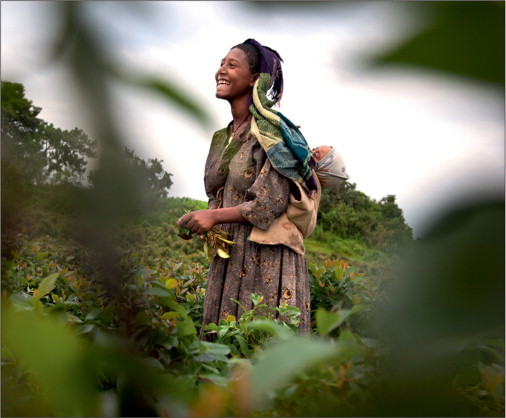
"...this is where Cinema Corner has a part to play by creating a forum for the often-unheard voices of women and girls whose lives are being devastated by sexual violence or illegal abortion or human trafficking."
This paper describes the strategies underlying Cinema Corner, a film festival featuring 80 films that use the entertainment-education approach in order to advocate for better maternal health, raise awareness about gender-based violence, and speak out for women's empowerment in developing countries. Taking place at the 2013 Women Deliver conference, Kuala Lumpur, Malaysia, May 28-30 2013, Cinema Corner includes the work of emerging artists together with documentaries from organisations such as as the United Nations Population Fund (UNFPA), the BBC, the World Health Organization (WHO), the World Bank, PATH, Thomson Reuters, and Care International.
The author, Priya Shetty, states that what unites the Cinema Corner films is "personality. They each have a razzle dazzle of uniqueness about them, whether it's a stunning soundtrack or soaring cinematography, that lifts them up....Film - socially conscious or otherwise - needs to be art; and it needs to be good art. A shortcoming of some films about health and human rights is that they focus on the issues, forgetting that they need to tell a story too." For example, in David Evans' The Silkies of Madagascar, a "young weaver giggles as she models brightly coloured scarves for the camera, shaking her hips with confident verve. The scene captures the message of the film perfectly. These are independent women who live life with humour and grace, and who, with a little help [from a worker for a non-governmental organisation (NGO)], are empowered enough to provide for their families."
Along these lines, Emmy-Award-winning filmmaker Lisa Russell of Governess Films, curator of the event, says: "Scientists sometimes think statistics should be compelling enough to see a film through", but, per Shetty, "that's rarely the case. Numbers and figures may grab our attention or put an issue into perspective, but ultimately, it's the story that will drive the narrative....Creative ventures in which both the science and the art are strong require meaningful dialogue between artists and global health experts, whose universes often don't collide." Shetty describes Russell as "intellectually bilingual" - straddling the development world of senior UN officials and scientists as well as the creative world of artists. In one week, she attended a high-profile UN initiative launch, a poetry slam, and a hip-hop album release party - all of which advocated for improving the lives of young people - "yet had virtually no crossover in the people attending each event."
On that note, Shetty concludes that, while technical discussions between UN bureaucrats and scientists about research and policy are undoubtedly important, "these conference-room conversations, no matter how critical, shouldn't drown out the voices of those whose stories need to be told, in their own words. For these are the stories that really matter."
The Lancet, Volume 381, Issue 9879, Pages 1709 - 1710, May 18 2013. Image credit/caption: Stephanie Sinclair/VII - from Too Young to Wed (pictured above: 15-year-old Destaye stands in a field with her son near Bahir Dar, Ethiopia)
- Log in to post comments