










































Film Clips for Character Education
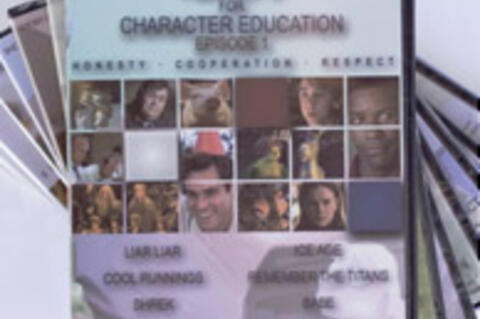
This project uses the medium of popular film within an educational setting to stimulate students' thinking on moral action and character, and to enhance their engagement with classroom curriculum in such areas as science, language arts, social studies, and the arts. Organisers have selected movie clips from major motion pictures for their ability to connect content-area learning with an understanding of the world. They portray relevant themes which have been identified through character education initiatives, and thereby can be used to strengthen the development of character in the instructional setting. The clips provide students with situations that relate to "real life" experiences and draw them into a natural engagement with the subject. For example, the concept of honesty may be illustrated by an excerpt from the movie "Big Fat Liar", and may inspire classroom conversations in response to questions such as: Have you ever been caught lying and not known how to break the pattern? Who could you talk to about this? Organisers state that certain concepts, such "respect", can be abstract; visual illustrations through concrete stories portrayed in popular films can, the organisers hope, "promote global vision mainstreaming and...make the world a better, more knowledgeable planet by communicating in a universal language." They feel that teachers who are open to use of popular culture in the classroom can have greater impact than those who rely solely on didactic teaching from print media or oral delivery of information.
The core Film Clips for Character Education materials can be distributed (for a fee) in any number of ways, from DVDs, to server residences, streaming video, podcasts, etc. Free ancillary materials available on the project website, such as study guides and lesson plans, are designed to enable instructors to effectively use film to help students visually understand abstract concepts such as empathy, forgiveness, kindness, loyalty, bravery, responsibility, citizenship, integrity, good sportsmanship, self-control, respect, tolerance, etc. One series of unit plans developed by a teacher and offered on this website includes suggestions for assessment of learning, movie segments from the Film Clips resources, and a process for developing a service-learning project related to the essential questions identified in the unit. "You are encouraged to use this as a resource in making the connection between high quality instruction and engaging students in our democracy through taking civic action on issue related to what they are learning in school. Critical thinking and problem solving skills would be necessary components of instruction as students weigh multiple options, explore alternative solutions, and determine effective courses of action. In the process, important life skills, communication, and technology skills would be seamlessly interwoven with core academic content as students undergo a rich unit of study that would help them become better citizens for the 21st century."
Children, Youth, Education.
Organisers state that "[t]he notion of the entertainment industry working with the education community is unique but the outcome has been quite positive, with the entertainment industry (studios) dropping the costs of licensing to an unprecedented rate of US$1,500 per minute (compared to the normal commercial rate of US$15,000 per minute)."
Film Clips has been made possible through the support of America's film community, individual donors, corporations, and funding by Safe and Drug Free Schools, 21st Century Community Learning Centers, and State & District Departments of Education.
Emails from Jill McDonald to The Communication Initiative on July 12 and July 14 2008; and Film Clips website.
- Log in to post comments