
























Child rights action with informed and engaged societies

After nearly 28 years, The Communication Initiative (The CI) Global is entering a new chapter. 

Following a period of transition, the global website has been transferred to the University of the Witwatersrand (Wits) in South Africa, where it will be administered by the Social and Behaviour Change Communication Division. Wits' commitment to social change and justice makes it a trusted steward for The CI's legacy and future. 

On the transfer, co-founder Victoria Martin expressed her pleasure to see this work continue under Wits' leadership, knowing that co-founder Warren Feek (1953–2024) would have felt deep pride in The CI Global's Africa-led direction. 

As Wits, we honour the team and partners who sustained The CI for decades and look forward building from that strong base. This includes co-founders Warren Feek (1953-2024) and Victoria Martin as well as La Iniciativa de Comunicación (CILA), which continues independently at lainiciativadecomunicacion.com with links to The CI Global site. We are also eager to forge new partnerships and entertain new ideas as we consider how best to contribute to social and behaviour change in our rapidly evolving environment.

If you are joining the International Social and Behaviour Change Communication (SBCC) Summit in Panama, please join Wits and CILA on Monday, 22 June, to share your thoughts and suggestion for the relaunch of the Communication Initiative. We will be in Pacifica 5 from 12-1:25 for the Refuel, Reflect, and Renew Lunch Series: The Communication Initiative: celebrating a driving force for Communication for Social Change and the way forward. We will reflect on the legacy of Warren Feek and family in creating the Communication Initiative, consider the contributions of CI over the years and then turn our attention towards the future in this dynamic session. 

If you are unable to join us in Panama, we still want to hear from you. Please contribute your thoughts by following this link: https://redcap.link/CommunicationInitiative2026 or reaching out to ci_surveys@commint.com

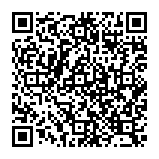
You can also follow the QR Code:

 https://redcap.link/CommunicationInitiative2026

Time to read
less than
1 minute
Read so far

Feasibility, acceptability, and preliminary efficacy of the unity workshop: an internalized stigma reduction intervention for African American women living with HIV

0 comments

Rao, D., Desmond, M., Andrasik, M., Rasberry, T., Lambert, N., Cohn, S. E., & Simoni, J. (2012). Feasibility, acceptability, and preliminary efficacy of the unity workshop: an internalized stigma reduction intervention for African American women living with HIV. AIDS Patient Care STDS, 26(10), 614-620. doi: 10.1089/apc.2012.0106

OBJECTIVE: Observational studies have examined the prevalence and impact of internalized stigma among African American women living with HIV, but there are no intervention studies investigating stigma reduction strategies in this population.

METHODS: Based on qualitative data previously collected, we adapted the International Center for Research on Women's HIV Stigma Toolkit for a domestic population of African American women to be consistent with Corrigan's principles of strategic stigma change. We implemented the intervention, led by an African American woman living with HIV, as a workshop across two afternoons. The participants discussed issues "triggered" by videos produced specifically for this purpose, learned coping mechanisms from each other, and practiced them in role plays with each other. We pilot tested the intervention with two groups of women (total N=24), measuring change in internalized stigma with the Stigma Scale for Chronic Illness before and after workshop participation.

RESULTS: Sixty-two percent of the participants self-reported acquiring HIV through heterosexual sexual contact, 17% through intravenous drug use, 4% in utero, and 13% did not know the route of transmission. The intervention was feasible, enthusiastically accepted by the women, and led to decreased stigma from the start of the workshop to the end (p=0.05) and 1 week after (p=0.07) the last session of workshop. Findings suggest the intervention warrants further investigation.