











































The Effect of Household Heads Training About the Use of Treated Bed Nets on the Burden of Malaria and Anaemia in Under-five Children: A Cluster Randomized Trial in Ethiopia
Department of Epidemiology, Jimma University (Deribew, Sena, Dejene, Alemseged, Tessema, Biadgilign); Department of Health Education and Behavioral Sciences, Jimma University (Birhanu, Sudhakar); Department of Public Health, College of Health Sciences (Reda); Department of Medical Laboratory and Pathology, Jimma University (Zeynudin); Faculty of public Health, Jimma University (Deribe).
This article, published in the Malaria Journal, shares findings of a study to assess the effect of community empowerment on the burden of malaria and anaemia in under-five children in Ethiopia. According to the article, long-lasting insecticide-treated bed nets (LLITN) have demonstrated a significant effect in reducing malaria-related morbidity and mortality. However, barriers to the utilisation of LLITN have hampered the desired outcomes. According to the study, training of household heads on proper use of LLITNs must accompany net distribution in order to significantly reduce the burden of malaria in under-five children.
In Ethiopia, the government distributed 20 million LLITN between 2005 and 2007, free-of-charge, to households with vulnerable groups. Yet, the actual utilisation of LLITNs in Ethiopia remains very low. Low community awareness and poor utilisation of the preventive methods pose serious challenges for the malaria control programmes. The research article explains that interventions that address behavioural aspects of LLITN use are crucial. The community should have access to information and skill-based trainings to properly use LLITNs. Cognisant of this fact, a cluster randomised trial was conducted in southwest Ethiopia to assess the effect of training of the household heads on proper use of LLITN on the burden of malaria and anaemia in under-five children.
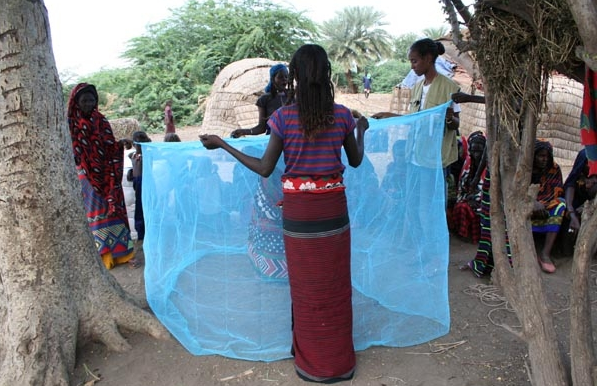
The intervention consisted of tailored training of heads of the households on the proper use of LLITNs and establishing a community network system. A total 2105 household heads in the intervention villages were trained on how to use LLITN properly in a rural household. The training was given by nine village residents who received training of trainers (TOT) and was supported by demonstrations on the use of LLITN in real situations in the rural Tukul houses. After the training, each household received at least two LLITN. A community network system was also established to monitor the use of LLITNs and make the intervention sustainable. The network consisted of a monthly meeting and discussion between key partners such as focal malaria experts at the district health office, malaria committee members at the district health office, the trained village residents, and the researchers. Like the intervention villages, each household in the control villages received at least two LLITNs. However, the training and community network system were absent in the control villages.
The study found that the prevalence of malaria decreased by 38% (from 10.5% to 6.5%) at the 6 month interval of the project period in the intervention villages. On the other hand, the prevalence steadily increased by 55% in the control villages during the same period. Similarly, symptomatic malaria has steadily declined in the intervention villages compared to the control villages. The prevalence of malaria declined in both villages at the 12th month. Although not statistically significant, malaria prevalence was higher at the control villages compared to the intervention ones (proportion difference = -0.5; 95%CI: -2.5, 1.2). There was a decline in the prevalence of symptomatic malaria in both the control and intervention villages. Children in the intervention arm were less likely to have symptomatic malaria than children in the control arm.
The findings showed that the qualitative findings were in line with the quantitative measurements. In focus group discussions (FGDs) the community in the intervention villages expressed that they had acquired significant skills and knowledge to utilise LLITNs properly and consistently. On the other hand, community members in the control villages complained about the lack of skills and knowledge on how to use the LLITN in their Tukul houses. The qualitative findings revealed that the burden of malaria varied between the intervention and control villages. Most FGD participants in the intervention villages believed that the proper and consistent use of LLITN had significantly reduced the burden of malaria in their villages. In the control villages, people perceived that the burden of malaria was still very high in most of the villages.
This study suggests that training of household heads on the use of LLITN has a great impact on the reduction of malaria burden particularly at high transmission seasons. In a country like Ethiopia where malaria is the first cause of death among under-five children, scale up of such an intervention would have a far reaching impact on malaria incidence and in the achievement of the malaria related Millennium Development Goal.
Malaria Journal website on February 29 2012.
Photo credit: African Medical Research Foundation (AMREF)
- Log in to post comments