










































Continuing Education in Disaster-Affected Schools in Bangladesh: An Evaluation of the Education in Emergencies Project
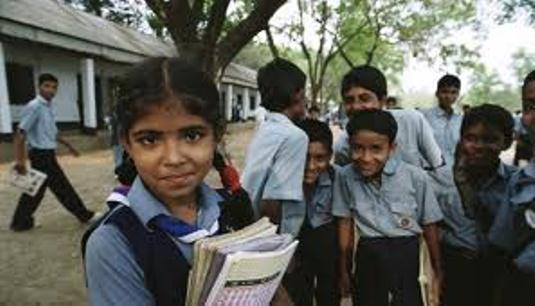
Plan International Bangladesh (Akram and Mahbub), United Nations Development Programme, Bangladesh (Chakma)
"Beyond financial constraints, one of the primary reasons disaster risk reduction in education is overlooked is the limited knowledge about the significance of the problem."
From the Abstract: "This field report describes the Education in Emergencies (EiE) pilot project, [funded by the United Nations Children’s Fund (UNICEF)]. EiE was implemented in 1,000 primary schools in ten districts in Bangladesh and designed to address the fact that project schools had been unable to continue providing education during previous natural disasters. Through the EiE project, however, school stakeholders participated in trainings and workshops, developed participatory contingency plans, and implemented various preparedness activities. Of the activities implemented, the selection of alternative learning places was found to be the most important because it enabled the disaster-affected schools to continue schooling when the school buildings were not usable. As a result of EiE implementation, schools were not closed for a single day in 2010. The pilot project has also benefited non-project schools as they have begun voluntarily adopting the project’s strategy to cope with disaster. The results of EiE show that simple interventions (e.g., capacity building and contingency planning) can enable disaster-affected schools to continue providing education during and after emergencies."
The key problems to be addressed included: a) loosely defined and sometimes non-existent disaster risk management plans in education; b) limited capacity of stakeholders in designing and implementing disaster risk management in education; c) unsystematic information management on education during disasters; d) ad-hoc coordination; and e) unpredictable and limited resources for risk reduction. The specific objectives of the project were to:
- Ensure effective and coherent education needs assessment, information management, and coordination.
- Increase the capacity of stakeholders regarding sustainable preparedness measures to reduce disaster risks in education.
- Ensure adequate contingency planning and preparedness planning to provide continuous access to education for children in disaster-affected areas.
A total of 46 out of 1,000 schools in the EiE project area were affected by flood in 2010. Some schools were destroyed, and some were partially damaged. The study of the EiE project described in this paper was conducted at four of these affected schools. The study: gathered student perspectives; documented support for the schools received from the government, community, civil society, non-governmental organisations (NGOs), and other bodies; identified measures taken to continue education during and after the disaster/emergency; and identified preparedness activities and the process of contingency planning in the EiE project in each school.
Contingency plans and preparedness activities derived from the plans included physical improvements to the schools and school access, purchase of learning materials to be used in disasters, improvement of evacuation procedures, and awareness raising with children, e.g., drawing and essay competitions related to disaster awareness. Planning was done by teachers, school management committees, and students and included identifying existing capacity and resources, e.g., alternative sites for learning and roles and responsibilities of various groups. The plans were put into effect during a disaster situation in which learning was able to continue and roles and responsibilities, e.g., repairs in the aftermath, were carried out.
The research identifies the following as project successes:
- "Level of awareness among most of the project-supported schools and upazila-level stakeholders has increased and they have realized the importance of EiE.
- All project-supported schools made contingency plans and implemented them accordingly. School stakeholders reviewed and updated this plan once during the year. All schools affected by disaster that year continued education. Some schools are still continuing to provide education in alternative places. The dropout rate also fell that year compared to the past. (In the project baseline survey the dropout rate was found to be 3 percent and is now even lower.)
- The small EiE grants were used by the schools and the witnessed changes inspired others to contribute financially.
- After launching of the EiE project, the upazila education authority in Gaibandha has started to discuss the EiE issue in the upazila primary teachers’ monthly coordination meeting.
- Communication among education stakeholders between the upazila and schools increased. A district education cluster was formed after launching the EiE project and the cluster organizes meetings bi-monthly.
- The EiE concept is being used in non-project areas of Gaibandha. Some of the schools in the non-project area of Saghata were damaged completely due to river erosion this year. But all of those schools were shifted to alternative places as per Upazila Education Officers’ instruction and continued education."
The recommendations include:
- Assess project support for schools based upon need.
- Increase capacity building of students, teachers, and school management committees and extend it to peer-to-peer training.
- Place more emphasis on school mapping and development of contingency plans.
- Ensure more children’s participation along with representatives from the upazila education authority, local government institutions, and local people. Broader stakeholder involvement can help ensure transparency and proper utilisation of resources.
- Establish a link between schools and the Union Parishad Upazila Disaster Management Committee as well as the Union Disaster Management Committee.
- Build awareness among children and community residents through mock drills.
[Editor's note: For a full PDF format document of this article, please consult the Children, Youth and Environments Journal website.]
Children, Youth and Environments website, Vol. 22, No. 2 (2012), ISSN 1546-2250, accessed on December 19 2012. Image credit: AusAID.
- Log in to post comments