










































Communication for Health Project
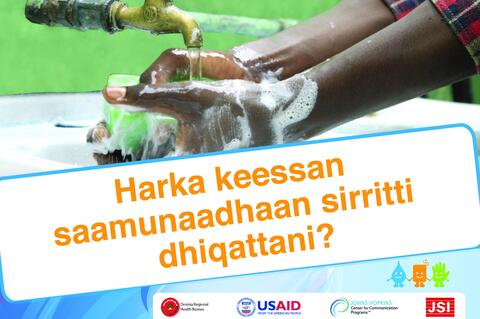
Communication for Health aims to measurably contribute to the adoption of healthy behaviours in four regions in Ethiopia (Amhara, Oromia, SNNPR and Tigray) by strengthening social and behaviour change communication (SBCC) capacity at the national, regional and sub-regional levels. The project’s ultimate goal is to increase knowledge and health practices of individuals and communities while supporting systems to improve the quality, capacity, and coordination of SBCC programmes. The project seeks to address the following health areas: reproductive, maternal, newborn and child health (RMNCH); malaria; tuberculosis (TB); water, sanitation and hygiene (WASH); prevention of mother-to-child transmission of HIV (PMTCT); and nutrition. Specifically, the 5-year (2015 – 2020) project has three main objectives: 1) to strengthen public sector health systems and coordination for strategic SBCC; 2) to strengthen SBCC design and implementation; and 3) to improve use of data for decision-making in SBCC.
Communication for Health is funded by the United States Agency for International Development (USAID) and will be led by the Johns Hopkins Center for Communication Programme (CCP) in partnership with the Ethiopian Ministry of Health and John Snow, Inc. (JSI). Other partners include: regional health bureaus, the Ethiopian Public Health Institute, civil society organisations, and public health universities.
The project involves the following programme areas:
Capacity strengthening: CCP in Ethiopia is using capacity building to elevate the quality and use of SBCC throughout the public sector health system. The project in supporting and creating technical working groups for SBCC at the national and regional levels, and working to ensure that those structures have the guidelines and policies they need to succeed and nurture a new generation of SBCC leadership in Ethiopia through SBCC education and training programmes. Ultimately, the project seeks to build a robust government team with the skills, mandate, and tools to lead, coordinate, and implement impactful SBCC programmes, and to ensure that the systems and structures supporting the vision will endure over time.
Strengthening coordination: When all levels of the system are coordinated, integrated SBCC activities will have the most impact. The project therefore works to strengthen coordination - including harmonisation of strategies, messages, and media - at all levels of the Federal Ministry of Health (FMOH), as well as civil society and private sector implementers at the regional and community levels. With Ethiopia’s high burden of disease and limited resources, establishing coordinated systems and structures will lead to better outcomes and more effective use of resources. To support coordination, one of the key features of Communication for Health is an Integrated Campaign Platform (ICP) which is designed to provide a trusted, recognisable, and credible platform to introduce or build on communication interventions. It organises health messaging in a coherent and coordinated way through multiple channels to support community-based health workers. The ICP serves as a centerpiece for integrating media to convey the variety of health issues while using a phased approach to messaging to avoid fatigue and confusion. In 2015, the Communication for Health project held consultative workshops in Addis Ababa to develop a draft framework for the ICP and the related media interventions. Representatives from the Ministry of Health, implementing partners, and members of the project team took part in the workshop to map the way forward with the ICP. The broader objectives for the ICP are: improving knowledge and attitudes to increase high impact health practices/behaviours; increasing social support within households and communities for beneficial health practices; strengthening the capacity of frontline providers - Health Development Army (HDAs) and Health Extension Workers (HEWs) - to effectively educate, motivate, and counsel households and clients; and increasing uptake and demand for selected services.
Implementing SBCC activities: Ethiopia’s SBCC professional are implementing SBCC activities in the six thematic health areas and learning as part of the process. CCP uses a blended learning approach that combines formal and non-formal avenues for improving skills and managing SBCC implementation.
Focus on assessing and improving quality: A unique feature of the Communication for Health project is its focus on assessing and improving the quality of the SBCC interventions and the capacity building interventions. CCP, JSI, and partners will create a toolkit adapted from existing tools specifically for Ethiopian SBCC organisations and professionals. The kits will include both capacity building and SBCC implementation quality assurance tools.
Creating a monitoring and evaluation system to drive and inform implementation: the project is working to increase the capacity for generation and use of data, is developing a system for collecting and sharing data, and increasing people’s ability to use data for quality assurance purposes. Rather than creating a new structure, CCP is investing in the Ethiopia Public Health Institute’s Performance Monitoring and Accountability 2020 platform. The platform uses mobile technology to monitor key indicators in family planning and water and sanitation and CCP will add questions about SBCC reach, effectiveness, and impact. In addition, CCP will use simple, accessible mobile phone technology platforms to do rapid, large scale formative assessments prior to specific health campaigns and share the data among SBCC stakeholders.
In addition, Communication for Health is strategically integrating gender into its various interventions through the development of various tools and SBCC capacity training. The project is designing SBCC interventions that address underlying inequitable gender norms in Ethiopia that are associated with unhealthy behaviours and low utilisation of health services, striving to make an impact at the household, social, and environmental levels by empowering women, involving men, mobilising communities, and strengthening organisational capacities for a lasting health behaviour change in Ethiopia.
To date the programme has undertaken the following activities:
- Conducted a gender audit with the Communication for Health project team to reflect on different gender issues, explored current programmatic and organisational practices related to gender, and provided collective input into the project’s direction to ensure gender integration at different levels. The audit resulted in the identification of key areas for additional staff training on gender, the establishment of the Gender Working Group (GWG), and the development of an organisational gender policy.
- Organised an interactive training on gender integration into SBCC programmes for regional/central staff and implementing partners including the Ministry of Health. The four-day training aimed to not only increase awareness about the importance of integrating gender approaches into SBCC programming, but to also strengthen participants’ skills in doing so.
Maternal and child health, malaria, HIV, TB, and reproductive health.
Ethiopia has made significant progress in population health, reaching important health milestones in maternal, newborn, and child mortality. However, maternal mortality ratio remains high at 420 per 100,000 live births, with low rates of antenatal care, skilled birth attendance, and postnatal care-seeking. Prevention of mother-to-child transmission of HIV (PMTCT) coverage is at 43 percent. Malnutrition, malaria, tuberculosis, and diarrheal diseases continue to contribute to maternal, infant, and child mortality.
Johns Hopkins Center for Communication Programme (CCP), Ethiopian Ministry of Health, and John Snow, Inc. (JSI), and funded by United States Agency for International Development (USAID). Other partners include: regional health bureaus, the Ethiopian Public Health Institute, civil society organisations, and public health universities.
JHUCCP website, JHUCCP website and JHUCCP Ethiopia website on June 13 2017.
- Log in to post comments