










































Children and Change 2012: Children and Participation
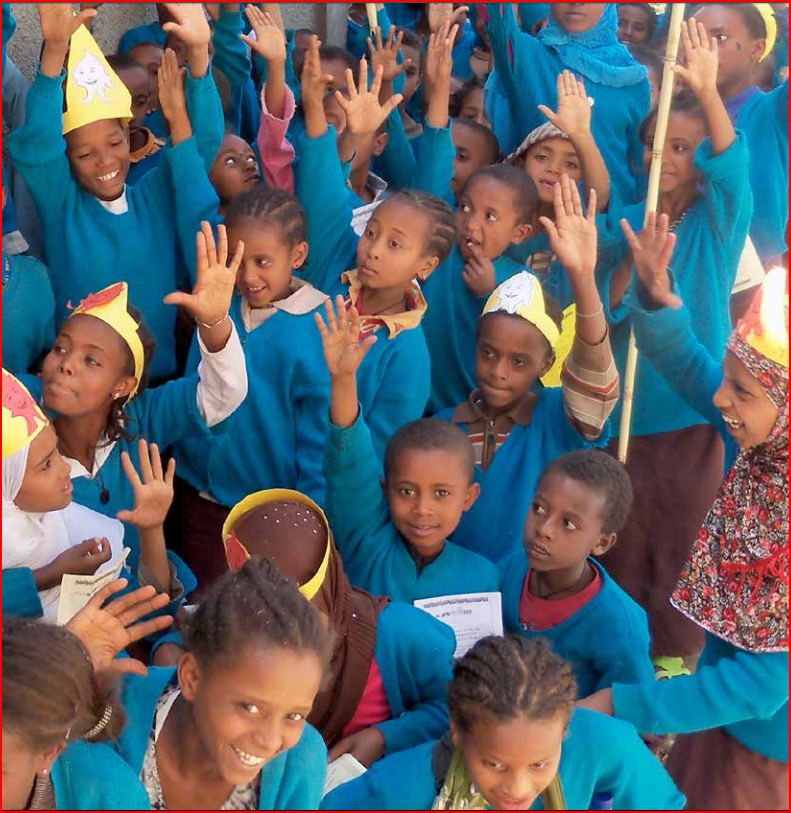
"The network's practice has shown that a participatory experience is the best way to teach children about social and financial education. Structured participation in the classroom allows children to be more active and as a result they have more fun, explore more ideas and internalise those ideas more efficiently."
This report focuses on the role that child/youth participation has in the work of a child rights non-governmental organisation (NGO) impelementing programmes globally called Aflatoun (further details about which can be found at the "Related Summaries" section, below) and examines the pilot of Aflatoun's new curriculum product for teenagers, Aflateen. By teaching basic social and financial skills and providing children with practical experience, Aflatoun seeks to harness the early period in a child's life for exploration, learning, and character development.
In brief, Aflatoun's curriculum contains both social and financial themes. The 5 core curricular elements include self-awareness, children's rights, learning how to save and budget, starting financial enterprises, and community projects. As part of Aflatoun's child-centred learning methodology, children are given space to express themselves, to act on their own, and to solve practical problems together. Methods of learning include storytelling, song, drama, dance, games, savings clubs, financial enterprises, and community improvement activities. Aflatoun believes that the mix of themes and methodology result in children who are socially and financially empowered and better able to handle life's opportunities and challenges. The outcomes of the Aflatoun programme are changes in behaviour and competency.
As highlighted in the report: "Participation is implicit in all aspects of Aflatoun....Participation must be fostered within formal and non-formal settings and curriculum content must be designed for it to occur....[T]his content, particularly the eleven case studies, reflects the achievements, values, diversity and best practices of the organisations that deliver the Aflatoun programme to children and youth." The rationale for is that: (i) Children learn from each other and need to learn to work together. (ii) When children work together, they contextualise information for themselves. The learning experience comes from peers and is based on their own practice and engagement within their community and cultures. (iii) Participation in learning environments is more inclusive, fun, and effective.
As described here, children's participation takes place in many shapes and forms in the Aflatoun programme. This begins with participatory approaches to implementation, extends to the activities that are in the curriculum and culminates in children taking their own initiative. This publication begins by looking at participatory research initiatives that have been conducted, ranging from using multimedia to valuation methods with children. After this, it examines the pilot of Aflatoun's new curriculum product for teenagers, Aflateen. [With a plan to, between 2011 and 2016, pilot and scale up its curriculum in 50 countries, Aflateen aims to develop socially and economically empowered youth to lead responsible lives and be agents of change. Youth engage in activities in the areas of financial capability, self-reflection, and enterprise. After facilitated sessions looking at identity and basic money management, young people develop practical social and financial skills by managing their own youth clubs. These youth clubs plan and run micro enterprises as well as develop community projects.]
For example, in the Philipines, Abot-Kamay, Inc. (AKI) Philippines, an NGO arm of United States (US)-based Children International, was part of the Aflateen pilot project and pioneered the use of peer-to-peer learning and the involvement of youth in the operational functioning of the programme. Organisers had noted that developing and implementing a financial and social education programme for youth comes with a distinct set of challenges. Abot-Kamay decided that it needed to consult youth throughout the process to ensure that the content remained relevant to the issues that affected them. So, youth participants helped design, manage, and evaluate the 10 learning sessions on financial and social concepts. Abot-Kamay chose to let youth participate in developing, revising, and adapting the methodology and curriculum to ensure that it was appropriate for the learning needs of teenagers. The organisation provided 4 structured venues for youth to provide their input to the Aflateen programme: (i) Following each session, facilitators met for an hour to evaluate the session that they had just handled, raising issues like the lack of visual aids. (ii) Monthly, all teen facilitators met to share their experiences in delivering the learning sessions in their clubs. (iii) Programme evaluations used teen facilitators to evaluate the implementation of Aflateen and to recommend changes in the programme design as well as in its content and structure. (iv) The organisation used 2 "writeshops" to solicit youth participation. Specifically designed to gain youth input, these 1-day workshops fed into the development and revision of the Aflateen Facilitator's Manual for other teen facilitators.
Evaluation data from various countries are included in this report. To cite only one example, using the Aflateen platform, ChildFund Honduras is providing children and youth with leadership and advocacy skills. Their pilot started in 2011 with 30 youth who became facilitators for other youth. The intial assessment showed that young participants felt more confident to bring up ideas and share their experiences. Facilitators became models in the community, with the community being impressed by the way they carried out the responsibilities they had been given. Finally, due to role modelling, future facilitators were identified to carry the programme forward.
Findings across all Aflatoun countries point to potential positive impacts in children's lives as follows: altered savings preferences, greater confidence in dealing with social and economic enterprise, increased openness and engagement in social/financial enterprises, higher levels of participation, improved awareness of rights, and more equitable relationships with teachers.
In reflecting on these and other experiences and findings, Aflatoun notes that it plans to undertake advocacy with key stakeholders in each country in which it works with the hope of generating interest and traction with key stakeholders in education, both at a regional and national level. Also, "Aflatoun hopes to benefit from its membership of the Child and Youth Finance Movement where national platforms for financial literacy will hopefully create space for programmatic inclusion in formal education settings."
Aflatoun website, March 13 2013.
- Log in to post comments