











































Black Gold (Ouro Negro) Radio Drama
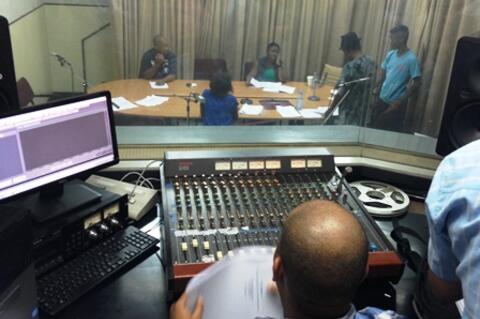
Black Gold seeks to primarily reach women aged 15-35, as well as caregivers and front-line service providers, such as community health workers, nurses, teachers, domestic helpers, and police officers. It addresses priority areas, such education, nutrition (including infant and young children feeding), hygiene and sanitation, HIV/AIDS prevention, maternal and child health, and prevention of malaria, violence, and child marriage.
The Black Gold storyline centres around the themes of tradition and modernity in the village of Jambolane, "a traditional African community, confronted with the arrival of a foreign mining company, which must negotiate the resettlement of the community and their ancestral spirits in order to extract coal from their land."
An initial 6-month pilot programme involved writing the first 48 episodes of the serial radio drama and producing and pre-testing selected episodes. Results of pre-testing revealed that people identified with the stories, a critically important requirement for behaviour change: "Participants stated that most of the situations narrated reflect the problems that people live with in their communities, especially issues related to hygiene, health, and the tendency not to send girls to school." The results from focus group discussions also showed that the episodes had the potential to catalyse dynamic discussion among youth, in particular. As stated by PCI Media Impact, "This promise of interpersonal communication provides an immensely valuable step in information sharing between people, setting the social agenda (of what people talk about), and it is a prerequisite of, and a step toward, behavior change."
Following pre-testing, the first season of the series was broadcast nationally twice a week in 2015. With success of the first season, Season 2 now airs twice on Radio Mozambique (RM) national radio, to cater for different audiences, as well as on 10 RM's provincial stations, 58 community radios, and 2 commercial broadcasters. Two new episodes per week are aired at 6:30 p.m., with rebroadcasts at 2:30 p.m. the next day. Season 3 will start broadcasting in July 2016, Season 4 is in the recording stage, and stories for Season 5 are being explored.
Health, Maternal Health, Child Health, Reproductive Health, HIV/AIDS, Malaria, Nutrition, Sanitation and Hygiene
The radio drama was conceived as the flagship communication programme to communicate the existing UNICEF-produced Facts for Life handbook. This handbook provides messages and information for mothers, fathers, other family members, and caregivers and communities to use in changing behaviours and practices that can save and protect the lives of children and help them grow and develop to their full potential. "Eight different UN agencies have collaborated on the development and production of the publication, which was first printed in 1989. In this way, Facts for Life also represents an important step in the process of achieving greater coordination and coherence of C4D communications that originate within and are sponsored by the UN system."
UNICEF Mozambique; PCI Media Impact, which "empowers communities worldwide to inspire positive social and environmental change through storytelling and creative communications"; Radio Mozambique; and World Food Programme
PCI Media Impact website and UNICEF website on February 9 2015; and email from Carina Schmid to The Communication Initiative on June 24 2016.
- Log in to post comments