











































Feed the Future Malawi Behaviour Change Communication Campaign
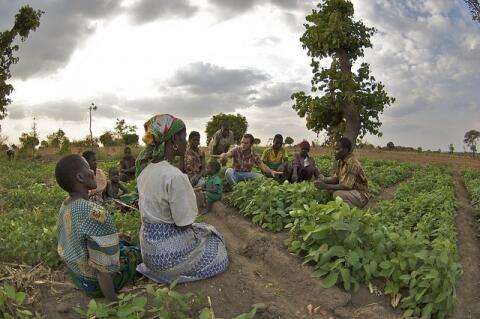
The Feed the Future: Integrating Nutrition in Value Chains (FtF INVC) initiative is a 5-year global project by the United States Agency for International Development (USAID) that is working to improve nutrition and reduce hunger by supporting country-led plans, which "represent coordinated, whole-of-government approaches to address food security that align in support of partner country priorities." In Malawi, the project is addressing three key areas: promoting improved nutritional behaviours; investing in high-potential value chains to develop markets and improve nutritional options; and engaging with the government of Malawi to improve the policy environment. Initial research resulted in these strategies focusing on legume (soy beans and groundnuts) and dairy value chains.
In order to address improved nutritional behaviours, a nutrition campaign was developed with the main aim to prevent stunting among children. This requires adequate nutrition during pregnancy and in the first 1,000 days of life. The campaign focuses on encouraging mothers, their family members, and service providers to encourage good nutrition during these key periods in a child's development. This includes addressing: maternal nutrition; early and exclusive breastfeeding through 6 months of age; use of appropriate, diverse foods beginning at 6 months of age; targeted micronutrient supplementation; and improved hygiene and sanitation.
Pakachere IHDC is providing SBCC technical advice for this campaign to local implementing partners, as well as guidance on how to package messages in order to influence behaviour change. Pakachere is also developing, producing, and disseminating mass media products through radio and print, as well as conducting community mobilisation through village participatory performances by community-based drama groups and Pakachere Travelling Theatre.
Pakachere is using "positive deviance inquiries (PDI) and market surveys to unveil current nutrition desired practices among target audiences, establish barriers to adoption of desired behaviours and come up with suggested approaches that implementing partners will use to address the barriers. PDI will be used to identify individuals and families who within the same socio-economic situation are able to practice nutrition desired behaviours. Their motivation to behave positively will be used to motivate others to follow through demonstrations and mentoring." This approach has been developed due to the recognition that the "drivers of positive change for under nutrition in Malawi will ultimately be with the Malawian people, starting with communities."
Background information and updates are available on the Feed the Future website.
Nutrition, Children, Food Security
According to the Malawi 2011-2015 Multi-Year Strategy, "[h]igh population density and growth and a single rainy season per year pose a distinctive set of challenges that make Malawi chronically susceptible to food insecurity and famine. As recently as 2004/05, severe drought resulted in a costly humanitarian response to meet the basic food needs of 40 percent of the population. The national reaction to this tragic history of famine was to make food security its top national political priority by boldly forging a plan to minimize the risk of future crises..."
Development Alternative Inc. (DAI), Save the Children International, Michigan State University, Pakachere Institute for Health and Development Communication (IHDC), National Smallholder Farmers’ Association of Malawi, Farmers’ Union of Malawi, Malawi Milk Producers Association, Nkhoma Hospital
Pakachere website, Malawi FY 2011–2015 Multi-Year Strategy [PDF], and Feed the Future website on October 7 2014.
- Log in to post comments