











































Breastfeeding Video Series, Global Health Media
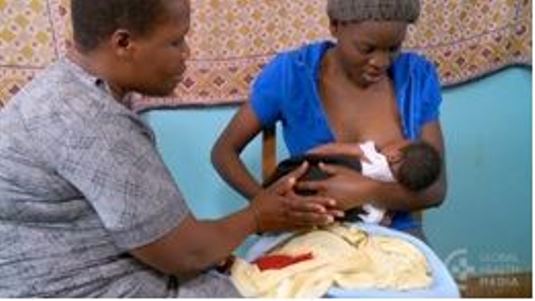
Global Health Media Project offers this series of videos on breastfeeding to illustrate critical health care information for providers and populations in low-resource settings. "This set of videos has been developed for health workers so that they can learn about breastfeeding best practices, how to better observe mothers breastfeeding, and how to manage common breastfeeding problems. These videos aim to give health workers the knowledge and skills they need to guide mothers to be more effective and confident with breastfeeding with the goal of enabling more mothers to exclusively breastfeed until 6 months of age."
The videos are intended for use by frontline health workers in the developing world and may be downloaded free of charge from the Global Health Media online video library. These live-action videos are filmed on location in the developing world. They are made for the small screens of mobile phones and tablets, so that they may be viewed on a range of devices, including video-capable phones, computers, laptops, netbooks, and personal data assistants (PDAs), depending on the technology available at training facilities, or to individual health workers, as complementary training tools, covering the key points of topics that can be visually conveyed. They are designed for use in pre-service and in-service education, as well as for review by health workers in their clinic settings. Nine of the videos are directed toward mothers as the audience.
The videos for health workers cover the following topics:
- Early Initiation of Breastfeeding,
- Helping a Breastfeeding Mother,
- Expressing and Storing Breast Milk,
- Breastfeeding Attachment,
- Breastfeeding Positions,
- Not Enough Milk,
- Nipple Pain,
- Breast Pain, and
- Breast Engorgement.
The videos for mothers cover the following topics:
- Breastfeeding in the First Hours
- Positions for Breastfeeding
- Attaching Your Baby at the Breast
- Is Your Baby Getting Enough Milk
- Increasing Your Milk Supply
- How to Express Breastmilk
- Storing Breastmilk Safely
- What To Do About Breast Pain
- What To Do About Nipple Pain
According to the project, the content is reviewed by newborn care experts - paediatricians and midwives with extensive experience in developing countries. Field-testing was done in focus groups with frontline health workers worldwide.
Email from Global Health Media Project to The Communication Initiative on June 3 2015 and the Global Health Media website breastfeeding page, July 13 2016.
- Log in to post comments