










































School-Based Delivery of Vaccines to 5- to 19-Year Olds
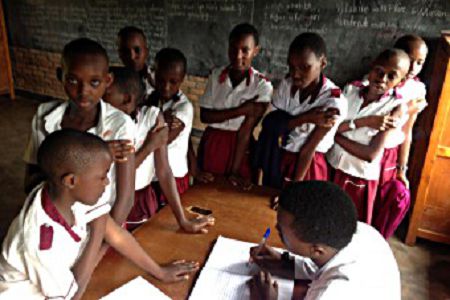
"The wide variety of experiences using schools to deliver TT-containing vaccines in 27 LMICs or HPV vaccines in 47 LMICs has provided valuable lessons about the factors that have resulted in success."
This chapter is based on the premise that increasing school enrollment and attendance, particularly by girls, has rendered school-based delivery of vaccines a viable approach, although mobile teams, outreach, and provision of vaccines at health facilities are needed to ensure equity. The chapter highlights the promise of school-based delivery of vaccines in low- and middle-income countries (LMICs), using the experience of tetanus toxoid (TT) and human papillomavirus (HPV) vaccine delivery as examples.
As noted here, information, education, and communication (IEC) components are essential in ensuring the success of school-based TT vaccination in LMICs. Parents and community leaders need to: know why the children are being vaccinated; have resources for further information, as well as know when the vaccination activities will take place; and understand what to do if their children miss the vaccine. To prevent rumours that TT vaccination is connected to fertility control and to address the immunity gap that results in lack of a second opportunity for TT vaccination in adolescent boys and adult men, both boys and girls are often vaccinated. Information on the protection conferred by the vaccine against tetanus caused by injuries during sports, planting, and other activities can help achieve community acceptance. The active engagement, collaboration, and training of the ministries of health and education on the requirements of the school-based TT vaccination have been found to be crucial.
Due to operational challenges caused by, for instance, lack of awareness of cervical cancer and of HPV infection as a causal agent, HPV vaccination is described here as requiring special attention to social mobilisation and communication efforts to ensure acceptability and high coverage. In most LMICs, messages have been disseminated through meetings in schools and communities, during home visits, and through written materials and radio announcements. In Rwanda, Uganda, and Vietnam, teachers play an important role in communication efforts. The World Health Organization (WHO) encourages all countries to develop communication strategies with multisectoral stakeholders and engage communities at the start of planning the programme. Among LMICs that have completed pilot delivery of HPV vaccine, all have chosen to focus messages on cervical cancer prevention and the importance of vaccination rather than to stress the sexual transmission of HPV.
The chapter looks at evidence of effectiveness of school-based delivery of TT and HPV vaccines, as well as cost issues. It also outlines critical elements in the success and sustainability of any vaccine delivery programme - especially those using schools - including: (i) government ownership, endorsement, and financial support; (ii) active and sustained involvement and leadership from ministries of health and education; and (iii) broad-based community support from health workers, teachers, community leaders, civil society, parents, and adolescents.
Specifically, key success factors for TT vaccine delivery in schools are:
- Government ownership and oversight;
- Active involvement of Ministries of Health and Education, as well as teachers, parents, community leaders, and other relevant organisations;
- Targeting the programme to reach both boys and girls;
- Over 50% primary school enrolment rate for girls, with the grade targeted before children start dropping out of school;
- Parental consent, usually obtained through sending out information from the schools and other media to parents;
- Considering school-based immunisation as part of the outreach immunisation services around nearby health facilities and conducting school immunisation session visits only once a year on a specific month; and
- Having school immunisation as part of a broader school health programme offering a package of interventions that includes life-based health education, deworming, dental hygiene, and general checkups to promote its general acceptance.
Among the lessons learned regarding HPV vaccine delivery in schools:
- HPV vaccine acceptance is high, even when knowledge about cervical cancer, HPV, and HPV vaccine may be low.
- Involvement of the Ministry of Education and, especially involvement of teachers at schools to organise pupils and to disseminate information, is important.
- Adequate social mobilisation is needed. This may include posters, leaflets, community and parent meetings, radio and television broadcasts, and newspaper articles. Teachers and health workers play a crucial role in raising awareness.
- Visible endorsement by national and local leaders from health, education and other influential sectors is critical for credibility and community trust.
- Written parental consent or implied consent procedures can be used, depending on the country's regulations and preference; consent procedures in private schools may be different from those used in public schools.
- Establishing community ownership may enhance parental acceptance and longer-term sustainability.
- Mixed delivery strategies allow girls who miss a dose at school to receive this at the health facility and may achieve higher coverage than school-based delivery or health facility-based delivery strategies alone.
In conclusion: "Pilot programs have been useful in providing countries with the opportunity to test new delivery strategies and learn what works well in their contexts. Community acceptance can be achieved through effective sensitization and mobilization efforts. Feasible delivery strategies for LMICs, especially using two-dose schedules, can be implemented and reach high coverage. And a strong case for the cost-effectiveness of using schools as a location for adolescent vaccinations has been documented....A holistic approach combining vaccine delivery with other interventions may help sustain both and has the potential to lead to improvements in the overall health of children and adolescents."
In: Bundy DAP, Silva Nd, Horton S, Jamison DT, Patton GC, editors. Child and Adolescent Health and Development. 3rd edition. Washington (DC): The International Bank for Reconstruction and Development / The World Bank; 2017 Nov 20. Chapter 15. Sourced from: ChildSurvival.net, October 16 2018. Image credit: 2017/Rachel Wilkinson
- Log in to post comments