
























Child rights action with informed and engaged societies

After nearly 28 years, The Communication Initiative (The CI) Global is entering a new chapter. 

Following a period of transition, the global website has been transferred to the University of the Witwatersrand (Wits) in South Africa, where it will be administered by the Social and Behaviour Change Communication Division. Wits' commitment to social change and justice makes it a trusted steward for The CI's legacy and future. 

On the transfer, co-founder Victoria Martin expressed her pleasure to see this work continue under Wits' leadership, knowing that co-founder Warren Feek (1953–2024) would have felt deep pride in The CI Global's Africa-led direction. 

As Wits, we honour the team and partners who sustained The CI for decades and look forward building from that strong base. This includes co-founders Warren Feek (1953-2024) and Victoria Martin as well as La Iniciativa de Comunicación (CILA), which continues independently at lainiciativadecomunicacion.com with links to The CI Global site. We are also eager to forge new partnerships and entertain new ideas as we consider how best to contribute to social and behaviour change in our rapidly evolving environment.

If you are joining the International Social and Behaviour Change Communication (SBCC) Summit in Panama, please join Wits and CILA on Monday, 22 June, to share your thoughts and suggestion for the relaunch of the Communication Initiative. We will be in Pacifica 5 from 12-1:25 for the Refuel, Reflect, and Renew Lunch Series: The Communication Initiative: celebrating a driving force for Communication for Social Change and the way forward. We will reflect on the legacy of Warren Feek and family in creating the Communication Initiative, consider the contributions of CI over the years and then turn our attention towards the future in this dynamic session. 

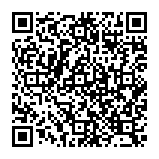
If you are unable to join us in Panama, we still want to hear from you. Please contribute your thoughts by following this link: https://redcap.link/CommunicationInitiative2026 or reaching out to ci_surveys@commint.com

You can also follow the QR Code:

 https://redcap.link/CommunicationInitiative2026

Time to read
1 minute
Read so far

Samvidha

0 comments
This project was established in recognition of the need to make relevant internet-based information accessible to all of India's teachers and students at a low cost. Carried out by the non-profit Media Lab Asia in collaboration with Indian Institute of Technology (IIT) Kharagpur, the Samvidha project is an effort to bridge the digital divide by providing off-line access to curriculum-related internet content using a query-based system. The technology is being tested for curriculum-based offline internet access in selected schools at Bhalopahar, Galudihi, Purulia; deployment is in progress at Bankura and Ashok Nager.
Communication Strategies

This information and communication technology (ICT) for Development (ICT4D) initiative is designed to address the fact that most schools in rural India cannot afford to connect to the internet, but need access to relevant content in answer to their queries on subjects related to their curriculum. Students are provided with a few terminals with an offline browser to enter their queries, which are then transmitted via email to a central server with a high bandwidth connection. The central server is responsible for query processing, content retrieval, and analysis. The web-based information is then filtered to ensure that the user gets relevant teaching and learning material. Specifically, the system stores domain knowledge for the subjects of interest in the form of an ontology of the concepts, the relationships between the concepts, and the list of words indicative of the various concepts. The user requirements are stored as a set of topics. Each topic is a collection of concepts and their associated importance with respect to the topic. The common requirements of a group can be taken as their curriculum content. Individual variations among the different students can be captured by their user profile, which includes each student's individual interests and capabilities. Domain knowledge and user profile may also be used to help students formulate better and more focused queries.

This idea of offering personalised content access and presentation is also reflected in the fact that navigation interfaces are offered in Bengali, Hindi, and English. Content which is appropriate for the user's needs is then emailed to the user in the school; information located on the internet is provided to the user in English or, where available, in a given Indian language.

Development Issues

Technology, Education, Children, Youth.

Partners

Media Lab Asia, IIT Kharagpur.

Sources

"Samvidha: Making Internet Content Available to Rural Schools in India", the United Nations Educational, Scientific and Cultural Organization (UNESCO) Bangkok website - featured in News on ICT in Education, emailed to The Communication Initiative on January 2 2008; and Media Lab Asia website.

Teaser Image
http://www.mla.iitkgp.ernet.in/logobox.JPG