










































NuLife
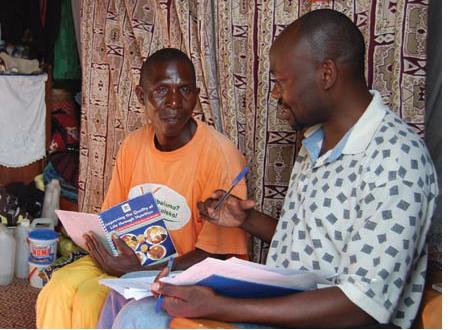
This report records the experience of the United States Agency for International Development (USAID)-funded NuLife - Food and Nutrition Interventions for Uganda project, which sought to help integrate nutrition care into the care of those infected with or affected by HIV/AIDS. This programme was managed by University Research Co. (URC), in collaboration with Save the Children, ACDI/VOCA, and Reco Industries. The objectives were to provide: technical and financial support to a series of local and international actors to integrate food and nutrition interventions into HIV/AIDS prevention, care, and treatment programmes; develop nationally acceptable ready-to-use therapeutic food (RUTF) using locally available ingredients; and establish a system for effective delivery of RUTF to severely malnourished people living with HIV/AIDS (PLWHA).
Collaborative methods and training in which communication is an inherent strategy were prominent among the steps taken to achieve these goals and objectives:
- Strengthening human capacity by training and coaching community health workers (CHW) in nutrition care and counselling at health facilities and in communities and organising them to share information and skills through teamwork;
- Improving the linkages (connections) between health facilities and communities to help locate and refer cases as well as provide follow-up care for the improvement of treatment adherence and recovery (continuum of care); and
- Establishing local capacity to produce ready-to-use therapeutic food from locally available raw materials through training and financial assistance.
Curricula and training materials were developed on nutrition, infant and young child feeding, and monitoring and evaluation, as well as counselling. To update national guidelines and feeding policies, support was provided for consensus building processes that promoted participation.
To build capacity for the integration of nutrition into HIV services, trainings were provided for facility-based health workers, Ministry of Health staff, CHW, PLWHA networks, and others. Materials, in-person trainings with experts, peer-to-peer learning sessions, coaching, and technical supervision visits were all employed; easy-to-use materials about nutrition were produced to incorporate nutrition messages into routine health education sessions.
In addition, local farmers were hired and trained to produce the basic ingredients (ground nuts) for the key food, known as RUTUFA (which means "will not die" in the local language). The potential for sustainable livelihoods created through the linking of training and economic development for farmers producing the raw materials for the nutrition programme is one long-term benefit of the nutrition programme. Advocacy promoting the inclusion of RUTAFA on the essential medicines list for Uganda is helping to ensure the implementation of the nutrition components of HIV/AIDS treatment while ensuring the viability of the farming ventures.
The report finishes with opportunities and challenges for the future of the NuLife programme and includes educational materials that were developed to increase awareness and capacity of participants across the spectrum.
The University Research Co (URC) website on December 9 2011.
- Log in to post comments