

























Child rights action with informed and engaged societies

After nearly 28 years, The Communication Initiative (The CI) Global is entering a new chapter. 

Following a period of transition, the global website has been transferred to the University of the Witwatersrand (Wits) in South Africa, where it will be administered by the Social and Behaviour Change Communication Division. Wits' commitment to social change and justice makes it a trusted steward for The CI's legacy and future. 

On the transfer, co-founder Victoria Martin expressed her pleasure to see this work continue under Wits' leadership, knowing that co-founder Warren Feek (1953–2024) would have felt deep pride in The CI Global's Africa-led direction. 

As Wits, we honour the team and partners who sustained The CI for decades and look forward building from that strong base. This includes co-founders Warren Feek (1953-2024) and Victoria Martin as well as La Iniciativa de Comunicación (CILA), which continues independently at lainiciativadecomunicacion.com with links to The CI Global site. We are also eager to forge new partnerships and entertain new ideas as we consider how best to contribute to social and behaviour change in our rapidly evolving environment.

If you are joining the International Social and Behaviour Change Communication (SBCC) Summit in Panama, please join Wits and CILA on Monday, 22 June, to share your thoughts and suggestion for the relaunch of the Communication Initiative. We will be in Pacifica 5 from 12-1:25 for the Refuel, Reflect, and Renew Lunch Series: The Communication Initiative: celebrating a driving force for Communication for Social Change and the way forward. We will reflect on the legacy of Warren Feek and family in creating the Communication Initiative, consider the contributions of CI over the years and then turn our attention towards the future in this dynamic session. 

If you are unable to join us in Panama, we still want to hear from you. Please contribute your thoughts by following this link: https://redcap.link/CommunicationInitiative2026 or reaching out to ci_surveys@commint.com

You can also follow the QR Code:

 https://redcap.link/CommunicationInitiative2026

Time to read
1 minute
Read so far

National Week of Action on School Pushout
0 comments
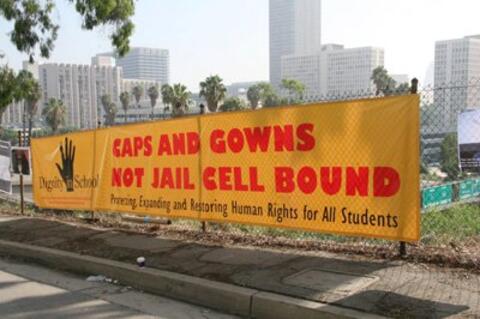
In October 2010, the Dignity in Schools Campaign (DSC) - a national coalition of parents, students, advocates, and educators from around the United States (US) working to challenge the systemic problem of "pushout" in that country's schools - organised a nationwide week of action. The advocacy campaign was motivated by the concern that too many students are pushed out of school by degrading environments and harsh disciplinary measures that undermine their learning. The DSC advocates for the human right of every child to a quality education and to be treated with dignity and promotes local and national alternatives to a culture of zero-tolerance, punishment, and removal. By organising actions around in 15 cities around the US during the week of October 11-17 2010, DSC sought to expose the issue of pushout and to engage people in the fight for the human right to education.
Communication Strategies

During the Week of Action, communities around the country called on policymakers to adopt positive models, like restorative practices and positive behaviour supports, which DSC says are shown to reduce suspensions by 50% and improve school climate and academic achievement. DSC's advocacy during the week involved organising town hall meetings in communities and speaking with local, state, and federal policymakers. DSC also asked people to:

  • sign and share the National Resolution for Ending School Pushout [PDF], a call to action signed by more than 200 individuals and organisations from 50 states and groups like the National Education Association and School Social Work Association of America;
  • hold an event, show a video, or teach a lesson on school pushout in the classroom or community; and
  • Post a story on school pushout on the national online DSC School Pushout Story Bank.
Development Issues

Education, Rights.

Key Points

The latest report from the National Center for Education Statistics found that more than 3.3 million students were suspended from school at least once and 102,000 were expelled in one year alone. According to DSC, pushout impacts historically disenfranchised youth at higher rates. In middle schools, black male students are three times more likely to be suspended than their white peers, based on data from the Department of Education. DSC maintains that these punitive practices do not reduce misbehaviour but, rather, put students at greater risk of failing classes and dropping out. Click here for more facts on school pushout in PDF format.

Sources

Email from Rachel Falcone to The Communication Initiative on October 7 2010; and DSC Facebook page, January 27 2011.

Teaser Image
http://www.comminit.com/files/68347_458778756624_130917131624_5987738_1622248_n.jpg