











































Mother Support Groups: Three-Day Training of Facilitators/Trainers - Facilitator Guide
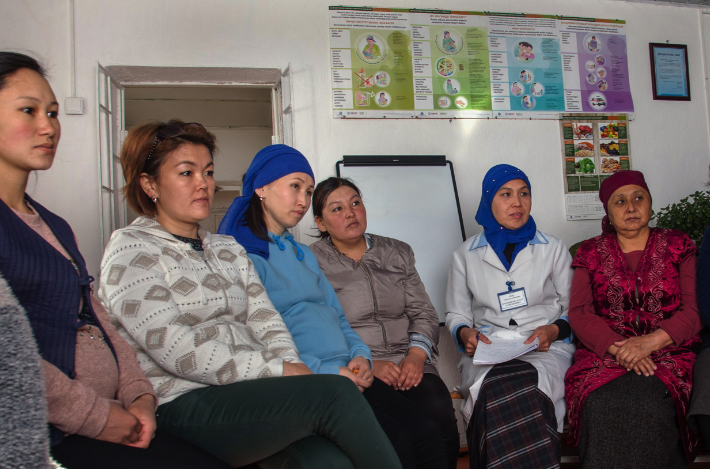
Launched in 1991, the Baby-Friendly Hospital Initiative (BFHI) is a global effort by the World Health Organization (WHO) and the United Nations Children's Fund (UNICEF) to implement practices that protect, promote, and support breastfeeding in health facilities to foster mother and child bonding. Hospitals undergo a process of planning, training, and policy changes that lead to achieving 11 key criteria. The tenth step (or criterion) of the BFHI is: Foster the establishment of breastfeeding support groups and refer mothers to them on discharge from the hospital or clinic. The Strengthening Partnerships, Results, and Innovations in Nutrition Globally (SPRING) project, which is funded by the United States Agency for International Development (USAID), has created what is intended to be an informative and useful training resource to inform and strengthen the quality of services provided by BFHI-certified health facilities in the Kyrgyz Republic. However, it could help other communication practitioners by providing a refresher on breastfeeding and complementary feeding basics and/or for preparing them to facilitate a mother support group in their own contexts and for their own purposes.
According to SPRING, "[a] non-formal and experiential learning approach allows women to examine their values and attitudes, discover assumptions and patterns of behavior, ask questions, and learn new ways of thinking about the feeding and care of young children. The aim of the support groups is to empower women to make better decisions and build their self-confidence through dialogue that encourages them to identify and solve their own problems."
By the end of the training, it is expected that participants will be able to:
- Name 4 characteristics of a mother support group.
- Name 3 roles of the facilitator in a mother support group.
- Name 3 characteristics of the profile of a mother support group facilitator.
- Name 3 necessary components to organise mother support groups.
- Describe the topics to be covered by a mother support group.
- Explain why an information system is important, and identify the components of a mother support group information system.
- Facilitate an infant and young child feeding (IYCF) mother support group.
- Mentor mother support group facilitators to enhance their skills.
- Review listening and learning skills.
- Review building confidence and giving support skills.
- Review recommended breastfeeding and complementary feeding practices.
SPRING/Kyrgyz Republic conducts BFHI trainings for facility-based health providers and administration, reaching 695 health workers across 17 hospitals and 10 family medicine centres (FMCs) as of March 2017.
English, Russian
78 (English); 86 (Russian)
SPRING website, October 4 2017. Image credit: SPRING/Kyrgyz Republic
- Log in to post comments