











































Learn to Learn - Aprende a Aprender
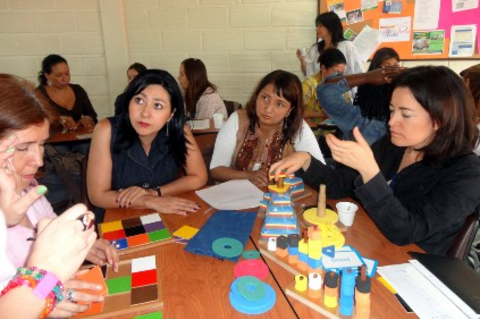
The programme Learn to Learn, developed by Colombia-based CINDE, is the result of a process of research and development that aims to contribute to improving the quality of education in preschool and elementary school, encouraging the children through cognitive games. The programme is a playing-teaching strategy which uses educational games (problem solving) to improve the quality of children’s education by strengthening their thinking abilities. The programme also seeks to develop teaching skills for teachers to implement the proposed methodologies. It was developed with the financial support of the Genesis Foundation and the Colombian Presidential Agency for International Cooperation and has the endorsement of Medellín’s Municipal Secretary of Education.
The programme uses toys and cognitive games oriented towards problem solving in both a virtual and a physical environment. One is the game called "Magic Land", through which children strengthen their cognitive skills during play using information and communication technology (ICT) - playing while teachers access an assessment system and monitor each child's performance in terms of development of their thinking skills. Through the tool, the teacher identifies the level of cognitive development of children. Teachers then generate reports for individual, group, and institutional guidance to teachers on the type of games needed to reinforce individual and group learning for those cognitive processes that are difficult.
Teachers participate actively in face-to-face workshops where, in one of the workshops, for example, 60 teachers shared their experiences of play and how children's learning was strengthened in areas related to cognition. As part of this training theory, the practices, started in 2011 with the implementation of games in the classroom curriculum, are articulated within and between different geographical and thematic areas. In 2013, plans include continuing with this experience of practice and sharing results, accompanied by the CINDE professional team, and then, later, beginning the process of multiplication of the practices to fellow teachers from the same institutions.
Implementation of a virtual training platform for teachers is planned, so that teachers not only regionally, but also nationally and internationally, can access the training processes to implement the strategy in their classrooms.
Early childhood education.
The programme takes place in educational institutions of Medellin, Colombia, which began the process in May 2011. Six teachers of the following institutions - Samuel Barnett, Lola Gonzalez, Carlos Ortiz Vieco, Normal Superior de Medellín, José Celestino Mutis, La Libertad, and the Swallows Foundation - have been actively participating in a diploma-based training process, focused on strengthening thinking skills in children who are in preschool and elementary school.
Genesis Foundation, Colombian Presidential Agency for International Cooperation, Medellín’s Municipal Secretary of Education, Presidential Agency for International Cooperation of Colombia (APC) (in 2012).
CINDI website, February 4 2013.
- Log in to post comments