










































Issues Management Guide to Support Countries in Preparing for Unexpected Situations with Implications for Public Communications
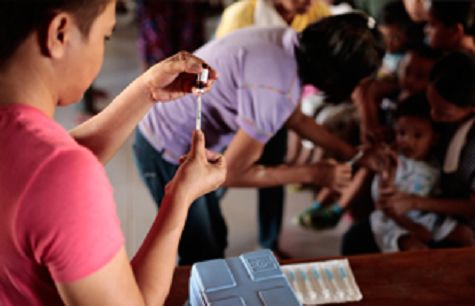
"Unpredictable, unexpected events happen - frequently they are marked by uncertainty, confusion and a sense of urgency. Such events can lead to lack of trust - in organizations, people or immunization services. Having a pre-prepared communications plan in place can help minimize the potentially negative impact of such events."
This resource document is intended to support countries in preparing for unexpected situations in relation to: (i) the introduction of inactivated polio vaccine (IPV), and (ii) the oral poliovirus vaccine (OPV) withdrawal, which may require a public communications response.
Objective 2 of the GPEI's Polio Eradication and Endgame Strategic Plan 2013-2018 calls for the introduction of at least one dose of IPV into routine immunisation (RI) systems in preparation for the phased removal of OPV. This document can help to identify an unexpected situation, evaluate its potential impact, and develop an appropriate communications strategy, in response, to minimise potential fall-out (e.g. affecting confidence in immunisation in general or IPV specifically).
The document outlines proposed best practices for developing a communication plan, based on the observation that "any vaccine related event can become a crisis situation if it is not handled correctly. Informing health workers, the media, parents or the public in a timely manner can help maintain confidence in the vaccine and the immunization recommendation." Key audiences include policy makers, medical professionals, health workers, parents, and local caregivers.
A chart on pages 4 and 5 gives scenarios of situations where issues management may arise, so as to enhance the learning of polio communication professionals, first, on determining whether to respond or communicate and, then, on how to develop the most appropriate plan in terms of timing, transparency, audience, etc.
Specifically:
- "The timing, candor and comprehensiveness of a public announcement are critical...particularly...given today's globalized, internet-connected world, where information can rapidly be transmitted in an uncontrollable manner. It is important that key internal partners are informed ahead of a public announcement."
- Transparency is key: "Communications should be conducted in an easy-to-understand, complete and factually accurate manner." This should also be the case when new information becomes available.
- "It is important to clearly identify with whom you want to communicate and understand their concerns."
- "[C]ommunications should be suitably understanding and compassionate in acknowledging and responding to the issue or event."
- "Having a pre-prepared communications plan in place and trained spokespeople are key. Sensitizing the media in advance of an unexpected event can also be helpful, not only for the introduction of a new vaccine but also for understanding the contribution vaccines make to the health and well-being of children and the country overall."
- "Monitoring and continually evaluating the situation will aid in further sensitizing and targeting a communications approach over time."
Various guidelines to consider are outlined. For example:
- Identify and confirm what has happened or what has been claimed to have happened;
- Designate a spokesperson who is credible and trusted, has knowledge on the subject, and is prepared to communicate with the media;
- Err on the side of too much communication;
- Provide regular updates, especially if the event affects whether or when IPV or OPV is given;
- Let media and public know if you do not have all the information and details;
- Be flexible and ready to take more or new action if events that initially seemed to have low impact on the vaccine programme suddenly change to medium or high impact; and
- Be proactive with positive communications about the value of vaccines and the polio plan.
The document concludes with a list of communications resources that have been developed at global and regional levels to support countries in their IPV introduction and OPV cessation plans.
For further information on IPV introduction, the OPV switch, and RI strengthening, please see the WHO website. Please send any questions or feedback on the materials to: polio2@who.int
Global Immunization Newsletter (GIN) [PDF], September 2014; WHO website, October 6 2014; and email from Lisa Menning to The Communication Initiative on October 13 2014. Image credit: WHO Western Pacific Region (WPRO)
- Log in to post comments