










































Internet, Schoolchildren and Rural Pakistan: How to Get Community Buy-in Including for Girls

Association for Progressive Communications (APC)
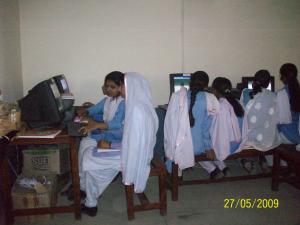
This Association for Progressive Communications (APC) news article explores a project called Dareecha (meaning "window"), which involved training schoolchildren and teachers from the rural Punjab in Pakistan to use the internet so that they could eventually create their own content. An initiative of the Centre for Research in Urdu Language Processing (CRULP), Dareecha took technology to the people. With their new skills, students and teachers in rural villages created 57 new, locally relevant school and community websites, which they presented in a competition held by Dareecha in June and August 2009.
According to the article, women and girls had a strong presence among the winners; organisers credit use of APC's Gender Evaluation Methodology (GEM) for this level of participation. GEM is a guide to integrating a gender analysis into evaluations of initiatives that use information and communication technologies (ICTs) for social change. The Dareecha team used GEM throughout all the different stages of the project: planning, implementation and evaluation.
As detailed here, Pakistan is characterised by a generally negative sentiment towards women gaining access to technology and new communication channels, because there is fear that the exposure to new ideas and people will have a negative impact on girls. Despite their own cultural reservations, with guidance from application of the GEM, organisers focused specifically on getting girls and women teachers involved. Instead of lumping all the students into one group with a male trainer, female students were given a female trainer and boys were given a male trainer. Even the way the material was presented catered to the different groups. For example, slide shows included gender-specific examples and questions, according to the different interests of genders, like local political figures that interested the boys and menhdi or henna design for girls. The team also ensured that they were very careful about online security; this was especially intended to gain acceptability from girls' schools and parents, who are generally more concerned about the safety of girls in terms of whom they communicate with and how.
The article concludes that the way the team dealt with the different needs of both sexes meant that girls, too, could learn about computers. The team leader recounts: "Women teachers were quite insistent in getting the girls involved, and there was more than one incident where girls were in tears because they wanted to join sessions that were already full." The authors of the article explain that "GEM becomes a way to see daily interactions and social norms though a 'gender-specific lens' because GEM allows evaluators to dig deeper and think about why things are the way they are, and how to consciously address the reasons through project design and implementation. In Pakistan GEM turned a social technology initiative into a process of change for all those involved - the Dareecha team, students, teachers and community members in these rural areas."
Email from Lisa Cyr to The Communication Initiative on April 29 2010; and APC website, May 19 2010.
Comments

Excellent overview of
Excellent overview of project work, including focus on GEM as a way of "seeing."
- Log in to post comments