











































"I want to go to university to become a doctor"
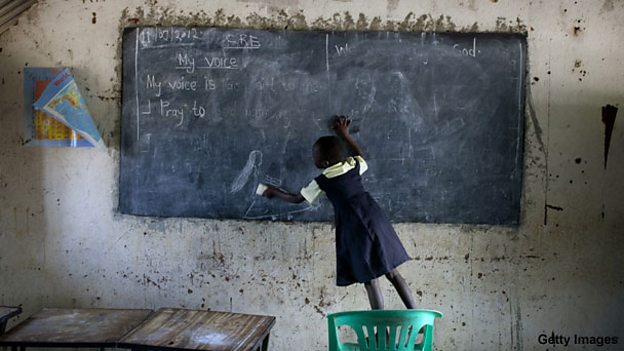
Author: Apune Jacob Alfred, October 13 2015 - The theme for this year's International Day of the Girl Child is the power of the adolescent girl and the vision for this generation of girls in 2030. As the day approaches, Apune Jacob Alfred reflects on the research he and colleagues at BBC Media Action have undertaken as part of the Girls’ Education programme in South Sudan.
"[I want to go to university] so that I can become a doctor and drive my own car." Adolescent girl, Ngomba, western South Sudan
This was just one ambition we heard earlier this year when we conducted interviews with teenage girls for BBC Media Action's Our School project, part of the DFID-funded Girls’ Education programme in South Sudan. In total, we spoke to 13 girls aged 13 to 18. Having a daughter myself, it was wonderful to hear about how interested these teenagers were to become doctors or engineers and become equal to any man in South Sudan.
We were working in Wau, Western Bahr El Ghazal, in the west of South Sudan on what’s called a longitudinal qualitative study which involves us speaking to girls, their families, teachers and key influencers in their community over a four-year period.
As the quote suggests, a key finding from our research is that this generation of women have big ambitions and hopes for their futures. However, in 2013, only 32% of those enrolled in secondary school were girls. Many of the girls in our study, despite being teenagers, were either not in school or were still in the lower grades of primary school.
What causes this gulf between ambition and reality?
Our study aims to understand better the drivers and barriers that influence girls’ opportunities in relation to education and, consequently, what they are able to choose to do in their lives.
Many of the adolescent girls we spoke to talked about a number of issues affecting their ability to go and stay in school. They told us about the pressure of domestic responsibilities, the expense of education – not only school fees, but also the price of uniforms, books and pens. Parents and others in the community also mentioned the harassment girls sometimes face from boys and men inside and outside of school.
“Life has been hard. Had it not been because of money problems, I would have got registered in school. So… these are the things that pain me." Adolescent girl, Kayango, western South Sudan
Informing programmes
The findings from our research directly feed into Our School, a 15-minute factual radio programme that includes real-life stories of girls, their families and schools to highlight the benefits of girls staying in school.
Recent episodes of the programme have directly tackled some of the main challenges the girls told us about.
For example, the show has focused on how to grow and manage income and expenditure in the household to help budget for school fees, how to split household chores among girls and boys equally and how girls can deal with boys inside and outside of the classroom.
Next year we will be returning to the same girls, families and teachers to see if and how their situations have changed – and what has contributed to these changes. I’m very much looking forward to going back and meeting the girls again so I can see for myself how they have progressed in their ambitions, and if and how the Our School programme is helping them.
Click here to access this BBC Media Action blog and related links on their work in South Sudan.
Image credit: BBC Media Action
Contact:
BBC Media Action
BBC Media Centre, MC3A, 201 Wood Lane
London
W12 7TQ
United Kingdom (UK)
Phone: 44 (0) 20 8008 0001
Fax: 44 (0) 20 8008 5970
Media.action@bbc.co.uk
- Log in to post comments