











































Education: Facility or Necessity?
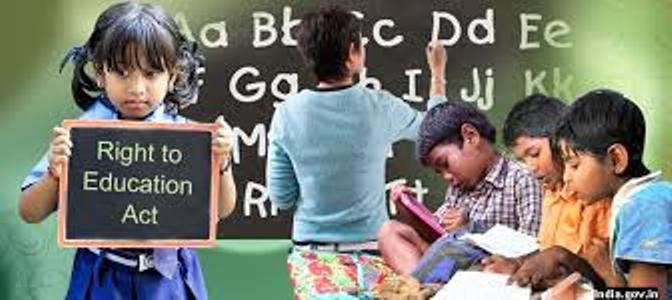
Authors Rukhsat Hussain and Niti Saxena, January 30 2014: Education is an indispensable requirement of growing years to lead a fruitful life later. Identified as one of the basic necessities furthering an individual’s development, education is deemed to be an essential input furthering livelihood security. It is not only an instrument for enhancing efficiency but is also an effective tool for widening and augmenting self-governing participation and improvement of individual and social life (Goel, 2008).
In the past, several steps have been undertaken by the Government of India in the domain of education, such that the objective of inclusive growth can be achieved. According to the Right to Education Act (RTE), implemented in the year 2009, each child within the age group of 6 – 14 years shall have the right to obtain free and compulsory education from the state. The target of RTE actually follows the globally set target in the form of one of the Millennium Development Goals, which states that every child must achieve primary education until class 8th by 2015. Even though, the Indian constitution identified it as a fundamental right in 1997, there continue to be innumerable eligible beneficiaries who stand far from accessing their right to receiving quality education.
Despite evident benefits that are associated with education, the country’s administration continues its struggle of bringing every eligible child to school. Government incentive schemes have been of help to facilitate enrolment but ground realities reveal stark contrasts. Mewat district of Haryana is one such region where the literacy rates dwindle with the overall literacy percentage estimated to be 54 percent according to the recent 2011 census undertaken by the Government of India. However, the low literacy rates cannot be attributed to lack or absence of initiatives or schemes in the domain of education. Glancing through the implementation status of education related government schemes and initiatives in the region; it becomes clear that concerted efforts have been made to improve the educational situation. However, the literacy figures continue to not resonate with the intensity of efforts being put in.
While there are several reasons which can be attributed to the sorry state of education in Mewat, one of the most tenable reasons could be livelihood insecurity of parents. Livelihood insecurity may not only be defined as not having regular employment in a remunerative occupation but also the insecurities emanating out of adopting particular livelihoods. For instance, children of migrant labour families never tend to go to school as their parents may keep shifting places to earn a living. Resultantly, they fail to create a permanent settlement which has diverse implications on the enrolment of eligible children in school. Additionally, there are situations where the households opt to not send their children to school as they are required on the farm or needed at home to assist in household chores. Hence, more than being viewed as a necessity, education is looked at as a facility which is accompanied with the option of being overlooked in case there are other important things requiring the presence of a child eligible to go to school.
Thus, futuristic interventions such as right to education act can only be realized if they take into account the complexity of socio economic determinants which influence the decision to opt for a facility like education. There is a dire need to differentiate the strata of population for whom education is a facility more than a necessity. Once that differentiation is made, the situation may be more conducive to design and implement interventions in more contextually suited environments which will help realize the dream of every child in school.
Rukhsat Hussain
Research Associate
Institute of Rural Research and Development
r.hussain@irrad.org
Niti Saxena
Social Scientist
Institute of Rural Research and Development
niti.saxena@irrad.org
- Log in to post comments