










































A Culture of Rights
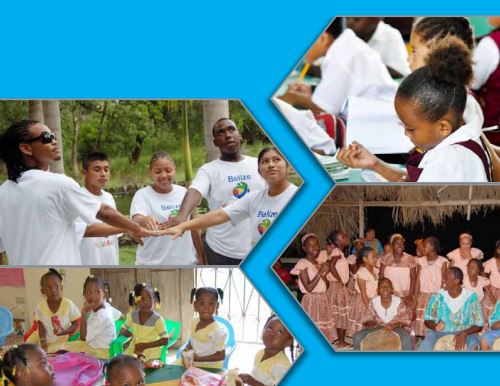
"The main aim of this Communication for Development Study, commissioned by UNICEF [the United Nations Children's Fund], centered on carrying out a study on the knowledge, attitudes, and practices (KAP) specific to Children’s Rights that will inform the Communication for Development (C4D) Strategy and that will cut across program sectors in Belize."
This UNICEF Belize study was designed to support country programme planning, implementation, monitoring and evaluation of its C4D strategy, by identifying gaps in children's rights and how to address them through sensitivity to "the family’s and community’s capacities to absorb, react to and participate in and amongst many competing priorities....[T]he C4D Strategy is regarded as the vehicle to effect positive behavioral and social changes to bring about sustainable community empowerment for children at the various geographical, economic, social and governance levels of the Belizean nation....Communication initiatives are central to broader empowerment processes, through which people arrive at their own understanding of issues, consider and discuss ideas, and negotiate and engage in public debates at the community and national levels. This role in empowerment processes helps distinguish [C4D] from other forms of communication and makes it a vital element in achieving the Millennium Development Goals (MDGs) with equity."
The communication study consisted both of a quantitative data collected through a survey and a qualitative research component; these were "centered on the following elements for analyses:
- Problem and Program Analysis regarding the culture of rights
- Communication Environment Analysis
- Participant Analysis
- Behavior Analysis
- Knowledge, Attitude and Practice Study
- Communication Channel Analysis"
Key findings and recommendations include the following from the executive summary:
- "[T]here is a perception that the advocacy for the Rights of the Child is a first world phenomenon..." and a lack of understanding of the Convention on the Rights of the Child (CRC) - for example, concern that a loss of the "right" to punish children by applying corporal punishment would lead to social erosion.
- Qualitative research showed that "income generation has resulted in children being put at risk of labor and sexual exploitation because children have become integral as 'sellers' as their persona enables quicker turnover of sales."
- Interviewees indicated that disabled children are not involved "in everyday activities in the community that include school, church and entertainment."
- The communication channels study showed that television, radio, and newspapers, rather than flyers and brochures, reach adults, while television is the primary communication medium for children.
- Results showed that participants did have confidence that reporting child abuse would lead to follow-up actions, and participants did not rank highly the right of children to primary education in minority languages.
- Recommendations (pages 35-37) were made for:
- Advocacy, including - For and with children: education programmes and workshops in child rights; creation of a comic book for children; creations of UNICEF child ambassadors; Special Olympics participation; creation of media outlets for children's thinking, including news columns, theatre, and storytelling; and posters and billboards near hospitals, playgrounds, schools, parks, and bus stops.
- Social Mobilisation, including - For and with family and caregivers, service providers, frontline workers, and the community: education programmes on CRC via parent/teacher associations (PTA)’s, church, community meetings, village council meetings, and parenting workshops; brand creation of the "Culture of Rights" of children; sensitisation workshops on the Family and Children’s Act (FACA); increased visibility of the work of policy and implementing bodies on CRC; integrating messages about good health practices with those of CRC; creation of a police-friendly face to create trust in duty bearers of child protection services; and engagment of faith-based community organisations, non-governmental organisations (NGOs), and youth groups.
- Behaviour Communication Change, including - sensitising policymakers to their potential impact on CRC; formulating committees to work on behalf of CRC; engaging the training of trainers concept for education; creating mass media advocates; using translators in multi-lingual areas and adapting messages for both genders; and engaging critical leaders in communities, especially regarding messages on potential sexual exploitation of children in commerce.
The Belizean Child | Virtual Knowledge Centre on the Children of Belize website, January 28 2015. Image credit: Christine Norton, Anna Hoare, Francisco Cuellar
- Log in to post comments