
























Child rights action with informed and engaged societies

After nearly 28 years, The Communication Initiative (The CI) Global is entering a new chapter. 

Following a period of transition, the global website has been transferred to the University of the Witwatersrand (Wits) in South Africa, where it will be administered by the Social and Behaviour Change Communication Division. Wits' commitment to social change and justice makes it a trusted steward for The CI's legacy and future. 

On the transfer, co-founder Victoria Martin expressed her pleasure to see this work continue under Wits' leadership, knowing that co-founder Warren Feek (1953–2024) would have felt deep pride in The CI Global's Africa-led direction. 

As Wits, we honour the team and partners who sustained The CI for decades and look forward building from that strong base. This includes co-founders Warren Feek (1953-2024) and Victoria Martin as well as La Iniciativa de Comunicación (CILA), which continues independently at lainiciativadecomunicacion.com with links to The CI Global site. We are also eager to forge new partnerships and entertain new ideas as we consider how best to contribute to social and behaviour change in our rapidly evolving environment.

If you are joining the International Social and Behaviour Change Communication (SBCC) Summit in Panama, please join Wits and CILA on Monday, 22 June, to share your thoughts and suggestion for the relaunch of the Communication Initiative. We will be in Pacifica 5 from 12-1:25 for the Refuel, Reflect, and Renew Lunch Series: The Communication Initiative: celebrating a driving force for Communication for Social Change and the way forward. We will reflect on the legacy of Warren Feek and family in creating the Communication Initiative, consider the contributions of CI over the years and then turn our attention towards the future in this dynamic session. 

If you are unable to join us in Panama, we still want to hear from you. Please contribute your thoughts by following this link: https://redcap.link/CommunicationInitiative2026 or reaching out to ci_surveys@commint.com

You can also follow the QR Code:

 https://redcap.link/CommunicationInitiative2026

Time to read
1 minute
Read so far

Child Protection Systems: Mapping and Assessment Toolkits Users' Guide
0 comments
Image
SummaryText

The Child Protection System Mapping and Assessment Toolkit is designed to respond to the child protection strategy to "develop and apply an analytic tool for mapping and assessing existing child protection policies, laws and services for adequacy and to identify obstacles and opportunities in implementation, especially in reaching vulnerable or excluded groups". The Users' Guide explains the development and testing of the two toolkits, comprehensive and core, and how to implement them.

The toolkits' contents draws from an array of materials representing thinking in child protection from around the world. It was tested in seven countries - Bangladesh, Cambodia, Democratic Republic of Congo, Guatemala, Kenya, Kyrgyzstan, and Tunisia [See the related summary below for a description of this evaluation and its recommendations.] - and input from a reference group of practitioners and academics from various child protection perspectives.

The first, a Comprehensive Toolkit, allows countries to undertake a thorough mapping of their child protection systems and to obtain a clearer picture of the strengths and gaps in those systems. The second, a Core Toolkit, provides for a more narrow mapping and assessment of a country, focusing on key elements of the system. This version is aimed to serve countries with limited capacity or difficult emergency contexts. Both versions are designed to be consistent with one another, and each can be customised to the country's context. The Users' Guide applies to both.

"The ultimate objective is to support the development of comprehensive effective and efficient child protection systems, appropriately structured and resourced, to reach and cater to children and their families. The Toolkit is intended to help users to identify and prioritize actions which will contribute to this process."

Click here to access the toolkits in Excel format.

Publication Date
Number of Pages

37

Source

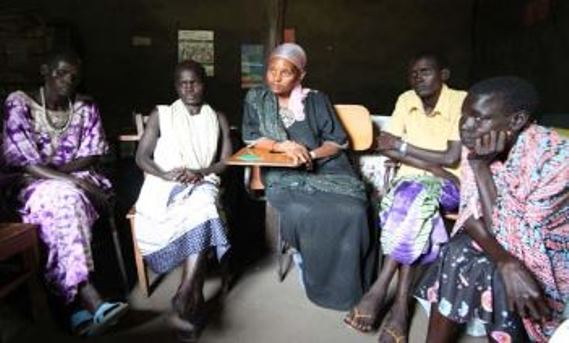
UNICEF's Child Protection Section website, September 18 2013. Image credit: Lindsay Stark